

One tin.
Everywhere.

 (For skin under pressure™)
The old model gives every symptom its own product.
NOOKS takes a different view.
Most dry, tight, rough or reactive skin has the same thing underneath it: a barrier losing water faster than it can hold it. One waterless barrier balm, applied everywhere, designed to support that structure instead of chasing every dry patch separately.
The tin, by the numbers.
(The numbers)One tin. Lips, hands and face, daily.
A day, with daily use across lips, hands and face.
Approximately, before the tin runs out.
Pick your pressure.
(Same tin, six situations)Skin that flushes easily, stings unexpectedly, or has started objecting to products it used to tolerate.
What is happening: the barrier has gaps. Water leaves, irritants get in, nerve endings sit closer to the surface than they should.
How to use it: warm a small amount between fingers, apply thin over clean skin. Nothing to sting. No water, so no preservative system and no pH to argue with.
“This balm has blown me away. I’ve been using it for a couple weeks now but after only a few days my skin was noticeably calmer and less red.”
Jennifer G. · verified · Jul 2026For skin already doing the work. A supporting layer around acids, retinoids and the rest of the regimen.
What is happening: actives increase turnover and thin the lipid layer that holds water in. The skin needs those lipids replaced.
How to use it: last step, over serums and treatments, thin. Bakuchiol at 0.5% sits alongside a retinoid without adding to the load. It is not a retinol and does not behave like one.
“I wanted something that did some heavy lifting while I’m using tretinoin, and this has kept me moisturised, flake-free and without any angry reactions.”
Lauren S. · verified · Jun 2026Chapped, chafed, rubbed raw where skin meets skin, clothing, shaving or movement.
What is happening: mechanical wear strips surface lipids faster than the skin can replace them. A breathable layer reduces the rub and the water loss at the same time.
How to use it: apply thin before the friction. Reapply as needed. External intact skin only.
“I finish every gym session applying it to my grip calluses, and after just a week, the hardened skin started to soften noticeably.”
Jye · verified · Mar 2026Frequent washing, cold, wind, sun and the daily wear of being outside.
What is happening: low humidity and detergents pull water out through the barrier. Transepidermal water loss goes up. Skin feels tight because it is.
How to use it: hands after washing, lips and cheeks before going out. A thin layer sinks in when warmed; it does not need to sit on top to work.
“My skin is surviving the extremes for winter with no such thing as cracked lips, peeling hands, or split cuticles.”
Lynn C. · verified · Aug 2026Skin that is dry regardless of season, product or how much you drink.
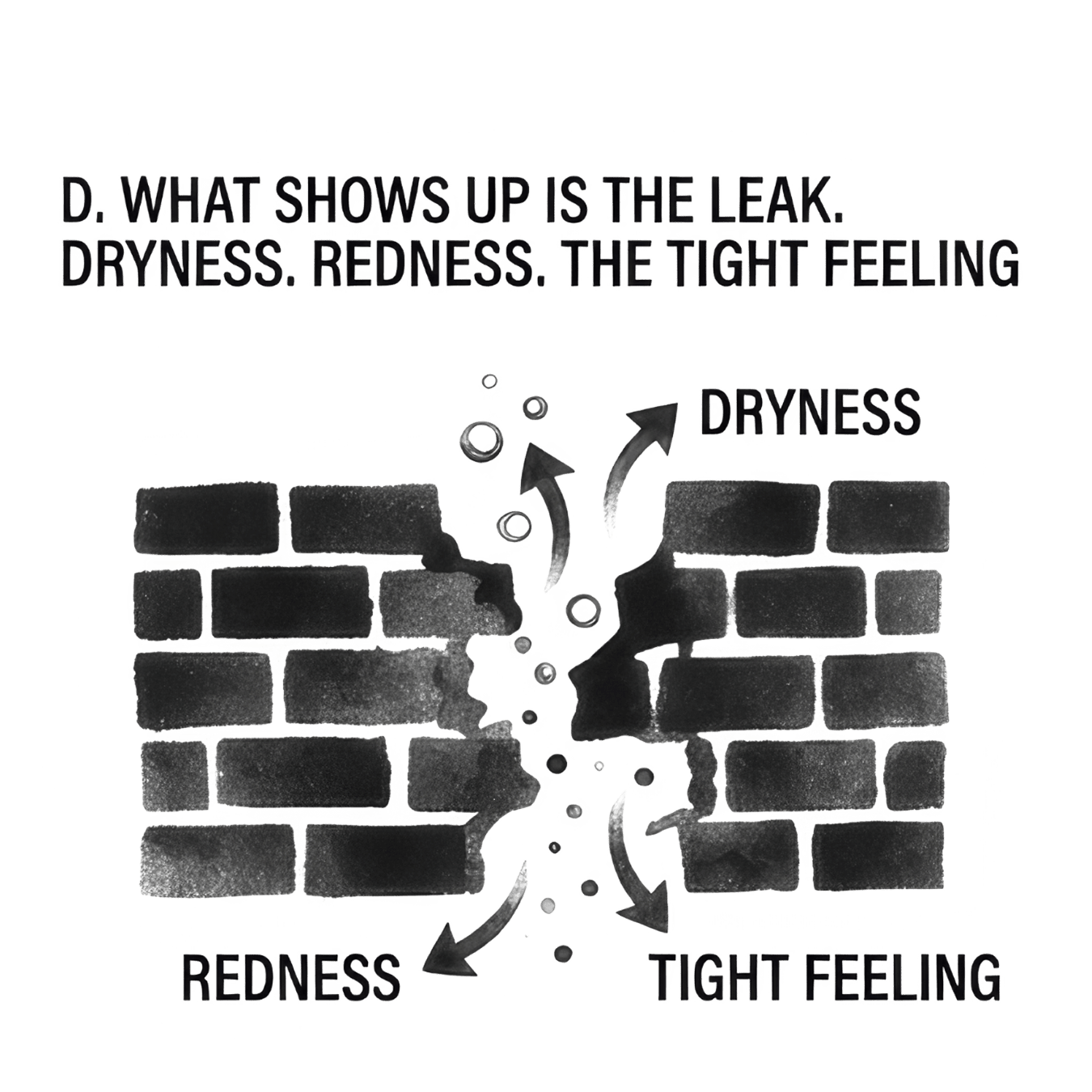
What is happening: this is not a shortage of water. It is a leak. The barrier lets water out faster than it comes in, so anything water-based evaporates and the tightness returns. Transepidermal water loss stays high until the lipids that hold water in are replaced.
How to use it: thin layer over damp skin, morning and night. Lips and hands as often as needed. It works with what is already there rather than adding water the skin will lose again.
“As a perimenopausal woman, it didn’t seem to matter how many layers of skincare I put on; by the end of the day I’d still look like a tired old shoe. But my skin literally drinks this balm up, and somehow it stays locked in all day.”
Julia · verified · Jul 2026For people who want the effect without the eleven-step routine or the three weeks of peeling.
What is happening: with age the skin makes fewer of its own lipids, water loss rises, and the surface loses its evenness. Most of what reads as ageing on the surface is a barrier holding less than it used to.
How to use it: one thin layer at night, on its own or as the last step. Bakuchiol at 0.5% is within the clinically studied range and has peer-reviewed data alongside retinol, without the irritation that comes with it. It is not retinol and does not convert to retinoic acid.
“Have also been using it as a last step in my skincare routine to lock it all in overnight - have seen a different with fine lines around my eyes and 11’s in a short amount of time.”
Bonnie DG · verified · May 2026For even the most compromised barriers.
When the barrier has been under pressure for long enough, it stops tolerating anything. Water leaves. Everything else gets in. The usual answer is another product to layer on top.
Ours is to give the barrier back what it is made of. Skin-identical lipids, no water, nothing to react with. Applied thin, left alone.
“Literally saved my skin. 2 years of no barrier, tried EVERYthing. Doctors, derms, regular facials.”
Gee M. · verified · May 2026 Before
 After
After
Why one balm can do all that.
Your shelf is full of products that each do one thing. The problem changes. The barrier keeps showing up.
Dry lips. Tight cheeks. Chafed skin. Overworked hands. The external intimate skin nobody else designs for. Different places. Similar underlying problem: skin struggling to hold onto what it needs.
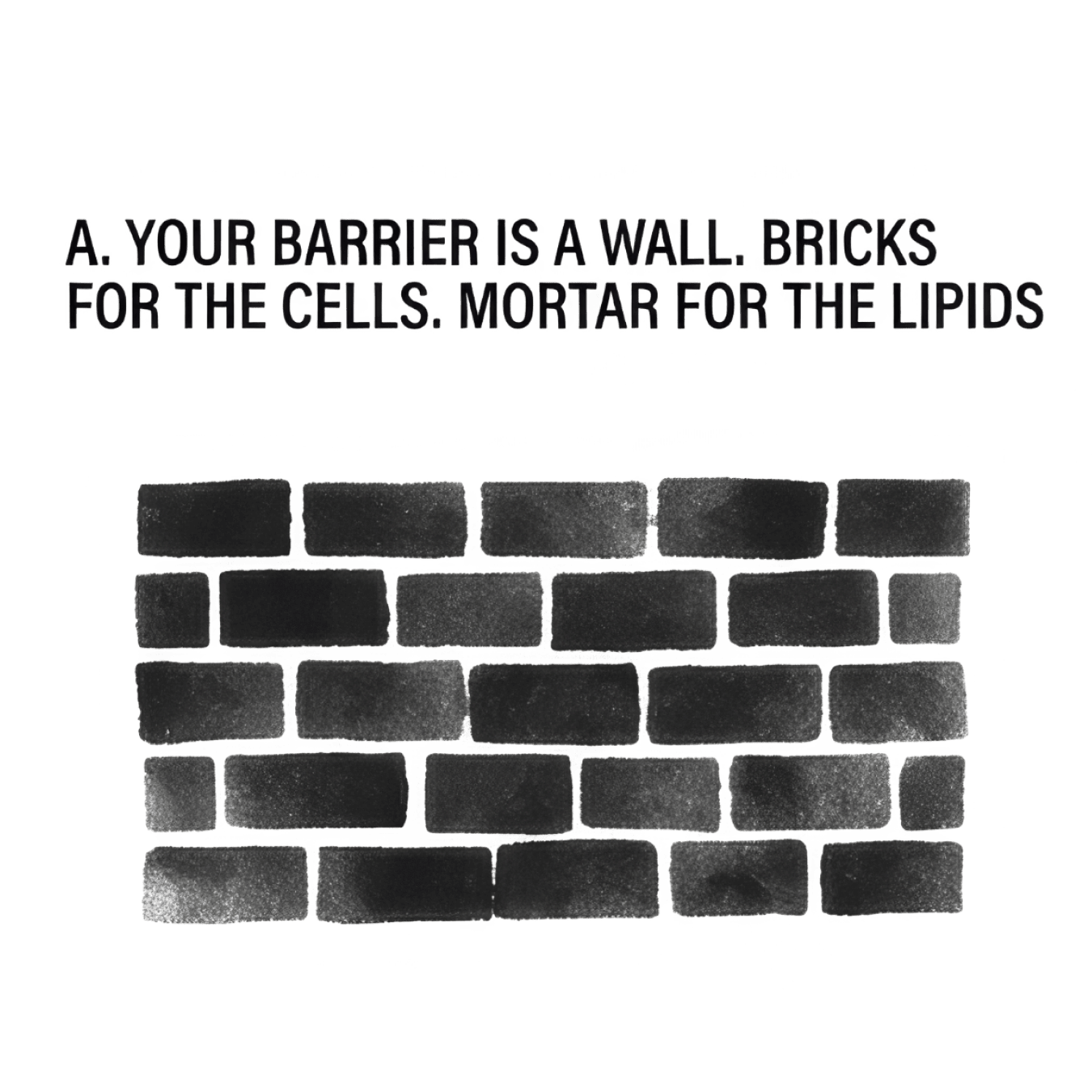
The outer layer of skin is built like a wall. Cells are the bricks. Lipids are the mortar. When the mortar thins, water escapes through the gaps and the wall stops doing its job. Dermatologists measure that leak as transepidermal water loss. Almost everything that looks like a separate problem is that one number going the wrong way in a different place.
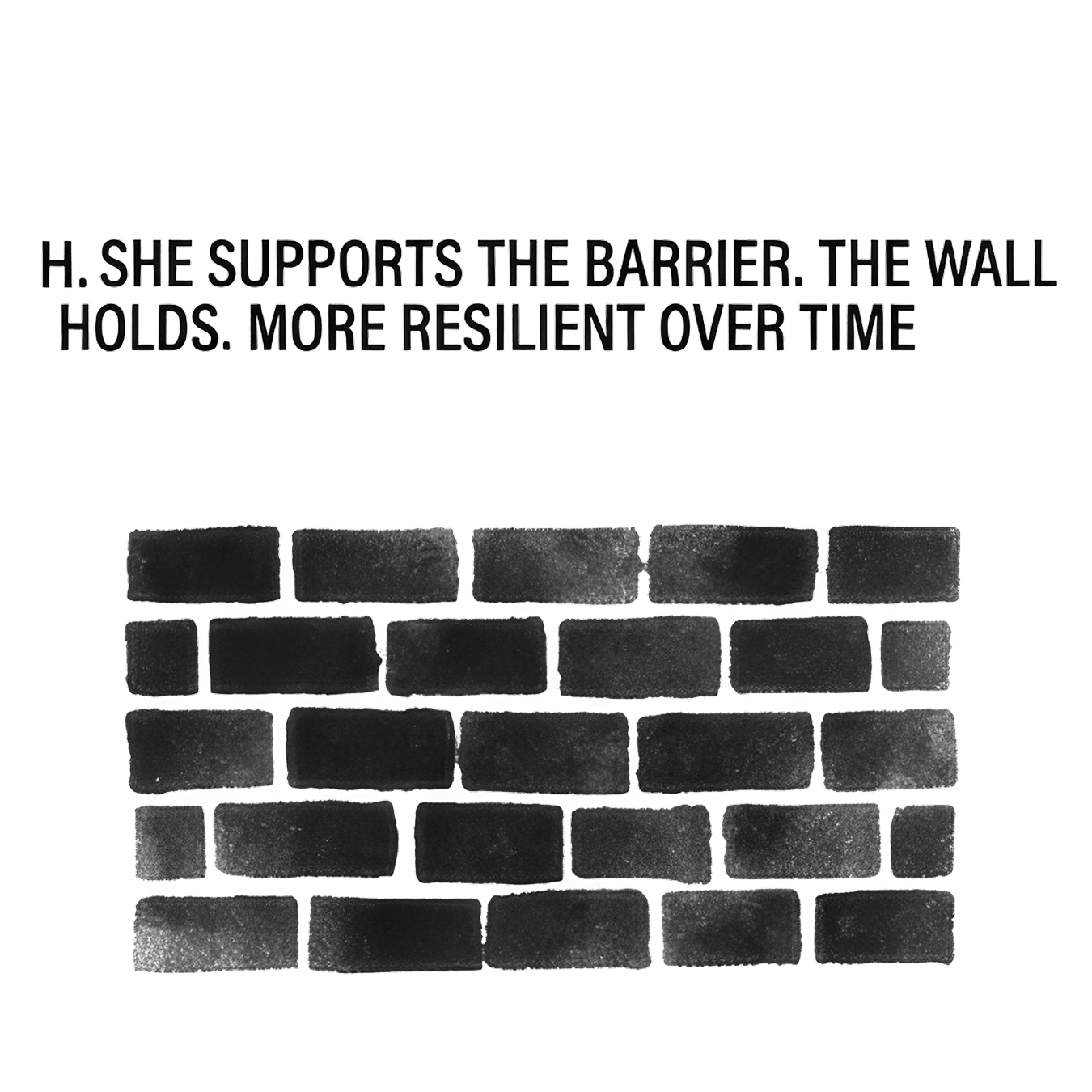
Petroleum sits on the wall. It is inert, so it cannot carry anything into it. Water-based creams add water the skin struggles to keep. NOOKS supplies the mortar: lipids in the same classes the skin already uses, so they integrate instead of sitting on top.







MCT, shea, jojoba, squalane, calendula-infused sunflower oil, beeswax.
Jojoba is a wax ester, the same lipid class the skin makes for itself. Squalane is skin-identical and one of the fastest lipids to integrate. Shea brings plant sterols and structure. Sunflower supplies linoleic acid, the fatty acid the barrier cannot make on its own. Beeswax holds it all in a breathable layer without sealing the skin shut.
Bakuchiol 0.5%, monolaurin, helichrysum, tocopherol.
Bakuchiol at 0.5% is within the clinically studied range. It is not retinol, not a vitamin A derivative, and does not convert to retinoic acid. Monolaurin is a fatty-acid ester that helps keep the surface environment settled. Tocopherol keeps the oils from oxidising in the tin and on the skin.
Bisabolol, calendula, marshmallow, plantain, manuka.
Bisabolol is the calming fraction of chamomile without the parts that make chamomile sting. Calendula, marshmallow and plantain arrive as infused oils. Manuka and helichrysum are dosed at trace levels chosen for comfort on the most sensitive external skin.
Water, petroleum, added fragrance, silicones, drying alcohols, dyes.
No water means no preservative system and no pH. Nothing water-borne to react with.
Proof.
Verbatim. Dated. Every quote links to reviews.“Glides on like silk and sinks into the skin effortlessly. I put on at night after my serums and it locks in all the goodness.”
Sarah A. · verified · Jul 2026“I am a lazy girlie, I can’t be bothered with a lot of products, Nooks has become my only night product (other than cleanser)”
Mikala G. · verified · Jun 2026“It lasts for hours on my lips and I love that it’s gentle enough for children’s skin too. As a long-time Vaseline devotee, I’m happily replacing it with Nooks.”
Vanessa P. · verified · May 2026“I have used paw paw cream on my lips for decades so now I only use Nooks.”
Tiff M. · verified · Aug 2026“i work with coal and have the driest hands you could ever imagine but nooks has saved my cuticles.”
Taryn W. · verified · Jul 2026“I work in a soil lab and between analytic and field work my hands see so much. I really like how quickly this absorbs”
Mim · verified · Jun 2026“My skin is so sensitive and I react to A LOT of stuff. I was nervous about using a balm texture on my face but I am glad to report that it’s worked beautifully.”
Sophie S. · verified · Jun 2026“I have very temperamental skin - great one day, and the next it can be terrible. Last night I had an extremely dry patch, but after applying Nooks, it appeared far less irritated and less dehydrated this morning.”
Kirsty · verified · Jul 2026“I use it on my face once daily, my intimate area as needed and my lips about twice a day (which is incredible because a regular lippy I’d be reapplying numerous times throughout the day because it just never stays on).”
Julia R. · verified · Jun 2026“It also a hardworking multitasking product - face, legs, hands, cuticles, lips - and eyebrows. A little goes a long way and I love that tin.”
Laura F. · verified · Jul 2026“I threw out the lip balm, Paw Paw cream,Vaseline and moisturizers I used to always carry in my bag, and now I take this balm with me everywhere!”
Ko · verified · May 2026“They keep pinching the NOOKS balm from my nightstand because it is so lush.”
Alex · verified · Jun 2026
Underneath every dry patch, the same problem.
Nooks goes there.
One product.
One tin.
Wherever skin is under pressure.
30-day one-tin guarantee. If it does not earn a permanent spot in your bathroom, we refund one tin, minus shipping.
Questions.
(Asked, answered)Can one balm really work on lips, hands, face and everywhere else?+−
Yes. The skin in those places differs in thickness and wear, but the structure underneath is the same: cells held together by lipids. When the lipids thin, water leaves. The balm supplies lipids in the classes the skin already uses, so the same tin works wherever that has happened. Use less on the face, more on hands and friction points.
Will it feel heavy or greasy?+−
Not if applied thin. Warm a small amount between fingers first. It sinks in and settles to a soft-matte finish. If it feels heavy, you have used too much. A pea-sized amount covers the whole face.
How is this different from petroleum jelly?+−
Petroleum jelly is inert. It sits on the surface and cannot carry anything into the skin. NOOKS is built from botanical lipids in the same classes the skin makes for itself, with bakuchiol at 0.5%, bisabolol and tocopherol carried in that base. One covers the skin. The other supports it.
Can I use it with retinoids or acids?+−
Yes, as the last step, over your treatments, applied thin. It replaces the lipids that actives thin out. Bakuchiol is not a retinol, not a vitamin A derivative and does not convert to retinoic acid, so it does not add to the retinoid load.
Where should I not use it?+−
Broken, weeping or infected skin, open wounds, blisters, post-surgical sites and fresh tattoos in their first week. External intact skin only. Healed tattoos from week two onward are fine. None of the range is a substitute for anything a doctor has prescribed.
Is it suitable for children, pregnancy or breastfeeding?+−
Children from two years, sparingly on intact external skin. Under two, the data is limited rather than concerning; one low-level ingredient has not been studied long-term in infants, so we do not make a claim there. During pregnancy and breastfeeding, external use on intact skin is fine. On nipples, apply after a feed and cleanse before the next one.
Does it have a scent?+−
No added fragrance. What you notice is the botanicals themselves, a faint shea note that fades as it sinks in. Manuka and helichrysum are dosed at trace levels so they do not read as scent. The full list is at /pages/ingredients.
How long does a tin last?+−
Around 3.5 months with daily use across lips, hands and face. That is 60 mL at $0.38 a day. A little goes a long way; most people over-apply for the first week and then settle down.