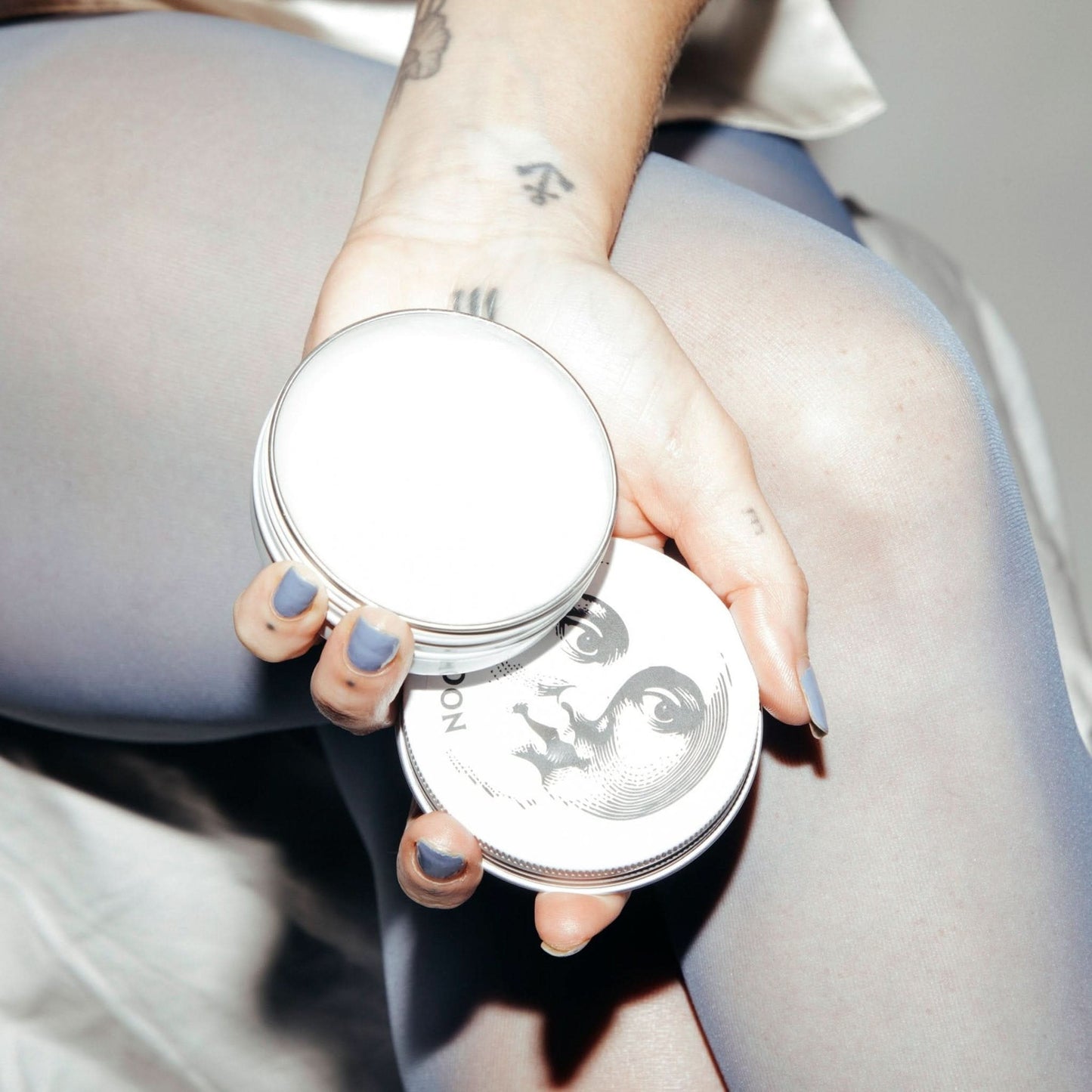
25 skin conditions the Everywhere Balm was built for.
Share
From the parts you mention at dinner to the ones you don't. Ranked from best in class to genuinely good.
Most skincare products are designed for the parts of your body that are easy to talk about. Your face. Maybe your hands. Occasionally your elbows if someone is feeling adventurous.
The rest of your skin — the parts under pressure, in between, intimate, reactive, or just consistently ignored — gets handed products that were never tested anywhere near them, or nothing at all.
NOOKS Everywhere Balm was built specifically for the gap. Not because every other product is bad, but because the conditions listed below either have no good solution, have solutions that actively aggravate them, or have solutions that can't go near the skin that needs them most.
Here are all 25, ranked from the conditions where NOOKS has no comparable competition, down to the ones where it's simply better than most.
For skin under pressure. Balm without the petrol. Actives without the sting. No off limits.
The full ranking at a glance
|
# |
CONDITION |
NOOKS ADVANTAGE |
|
1 |
Vulvar dryness and irritation (GSM) |
Best in class. Nothing else does this. |
|
2 |
Breastfeeding nipple trauma |
Best in class. Food-grade, no wipe-off. |
|
3 |
Post-partum perineal recovery |
Best in class. Zero sting tested. |
|
4 |
Perioral dermatitis |
Best in class. No preservatives, no fragrance. |
|
5 |
Perianal irritation and fissures |
Best in class. Formulated for mucosal safety, antimicrobial. |
|
6 |
Angular cheilitis |
Best in class. Oral-safe, antifungal. |
|
7 |
Vulvar eczema and contact dermatitis |
Best in class. Mucosal tested. |
|
8 |
Post-waxing / laser hair removal |
Best in class. Folliculitis cover. |
|
9 |
Hand dermatitis / occupational damage |
Genuinely excellent. |
|
10 |
Periorbital eczema |
Genuinely excellent. |
|
11 |
Lip licker's dermatitis |
Genuinely excellent. |
|
12 |
Eczema — flexural sites |
Genuinely excellent. |
|
13 |
Post-procedure skin |
Genuinely excellent. |
|
14 |
Tattoo aftercare (post-raw) |
Genuinely excellent. |
|
15 |
Seborrhoeic dermatitis |
Genuinely excellent. |
|
16 |
Under-eye skin |
Genuinely excellent. |
|
17 |
Stretch mark prevention (pregnancy) |
Genuinely excellent. |
|
18 |
Dry cracked lips |
Good. Better than most. |
|
19 |
Post-surgical scarring (healed) |
Good. Better than most. |
|
20 |
Eczema — discoid |
Good. Better than most. |
|
21 |
Radiation dermatitis |
Good. Better than most. |
|
22 |
Keratosis pilaris |
Good. Better than most. |
|
23 |
Rosacea-adjacent irritation |
Good. Better than most. |
|
24 |
Psoriasis between flares |
Good. Better than most. |
|
25 |
Pompholyx between flares |
Good. Better than most. |
Tier 1 — Best in class. Nothing else does this.
These are the conditions where NOOKS has no meaningful competition. The existing product landscape is either inadequate, inappropriate, or actively aggravating. In each case the formula was built — or refined — with this exact skin state in mind.
1. Vulvar dryness and irritation
TIER 1 Best in class
The most underserved skin on the body and the reason this product exists. Declining oestrogen — during perimenopause, postmenopause, post-birth, or during hormonal contraception — reduces vulvar lipid content and mucosal hydration. The result is dryness, irritation, tearing, and chronic discomfort that most people quietly manage with products that weren't designed for it.
NOOKS is the only treatment-grade balm on the Australian market specifically formulated for intimate skin and user-tested to achieve zero tingling on vulvar tissue. Marshmallow root mucilage reduces friction and protects mucosal surfaces. Monolaurin provides antimicrobial protection against the opportunistic organisms that thrive in compromised intimate tissue. Bisabolol reduces inflammation at the cellular level. The anhydrous format means no preservatives, no emulsifiers, no water-phase irritants — the usual suspects in intimate skin reactions.
Nothing else in this category has been tested here. That's not a marketing claim. It's the reason the formula was reformulated twice.
Strandberg KL, et al. Glycerol monolaurate inhibits Candida and Gardnerella vaginalis but not Lactobacillus. Antimicrob Agents Chemother. 2010;54(2):597-601.
2. Breastfeeding nipple trauma
TIER 1 Best in class
Cracked, raw, bleeding nipples are one of the most common reasons people stop breastfeeding. The existing standard is Lansinoh — a lanolin-based product that works but is animal-derived, carries a sensitisation risk for some users, and requires wiping before each feed.
NOOKS is food-grade throughout. No wipe-off required. Monolaurin is active against Staphylococcus aureus — the organism most commonly implicated in mastitis. Bisabolol reduces the inflammation of repeated trauma. Helichrysum CO2 supports tissue regeneration for cracked skin that's being repeatedly stressed. The formula was user-tested on intimate skin with zero reported tingling and is safe for infant oral contact.
No other treatment-grade balm with active repair ingredients is also food-grade and breastfeeding-safe. This combination does not exist elsewhere at retail.
Schlievert PM, Peterson ML. Glycerol monolaurate antibacterial activity in broth and biofilm cultures. PLOS ONE. 2012;7(7):e40350.
Tundis R, et al. Helichrysum italicum in promoting collagen deposition and skin regeneration. Int J Mol Sci. 2024;25(8):4145.
3. Post-partum perineal recovery
TIER 1 Best in class
Post-birth perineal tissue is traumatised, possibly sutured, acutely sensitive, and in contact with mucosal surfaces. Almost everything stings. Most barrier products contain preservatives or fragrances that aggravate already-compromised tissue.
NOOKS was user-tested on intimate skin with zero reported tingling — the closest available benchmark to post-partum perineal skin. No preservatives. No fragrance. No essential oils above 0.6%. Monolaurin provides antimicrobial protection during a period of heightened infection risk. Bisabolol and calendula reduce inflammation. Helichrysum supports tissue repair. The anhydrous format means nothing evaporates, nothing washes off, nothing requires reapplication every hour.
There is no other product in this category with this active profile and this safety benchmark.
Li G, et al. alpha-Bisabolol alleviates atopic dermatitis via NF-kB inhibition. Molecules. 2022;27(13):3985.
4. Perioral dermatitis
TIER 1 Best in class
Perioral dermatitis — the stubborn, bumpy, red rash around the mouth and nose — is one of dermatology's most frustrating conditions because the triggers are almost always in the products people use to treat it. Preservatives, fragrance, fluoride toothpaste residue, and topical steroid overuse are the classic culprits.
NOOKS removes every one of those triggers. No preservatives. No fragrance. No essential oils. No steroids. Bisabolol inhibits the NF-kB inflammatory pathway driving the rash. The anhydrous format means no water-phase irritants making contact with already-reactive perioral tissue. It does not cure perioral dermatitis — nothing topical does alone — but it is one of the only barrier products genuinely safe to use on it without risk of aggravating the cycle.
Most people with perioral dermatitis have been told to stop everything. This is one of the few things they can actually use.
Maurya AK, et al. alpha-(-)-Bisabolol reduces pro-inflammatory cytokines and ameliorates skin inflammation. Curr Pharm Biotechnol. 2014;15(2):173-181.
5. Perianal irritation and fissures
TIER 1 Best in class
Perianal skin is mucosal-adjacent, prone to friction, and in chronic cases develops fissures — painful, slow-healing, prone to secondary infection. Most people use petroleum jelly or nothing. Petroleum provides occlusion but zero active repair. Nothing else is mucosal-safe with treatment actives.
Monolaurin is active against the staph and candida organisms commonly implicated in perianal infection. Bisabolol reduces the inflammation that perpetuates the itch-scratch cycle. Helichrysum CO2 supports tissue repair in healing fissures. Food-grade throughout. Mucosal-tested. Absorbs without residue.
For non-acute fissures that need ongoing management: this is the closest thing to a purpose-built product the category has.
Seleem D, et al. Antifungal activity of monolaurin against Candida albicans biofilms. PeerJ. 2016;4:e2148.
6. Angular cheilitis
TIER 1 Best in class
The cracked, painful corners of the mouth that don't seem to heal. Angular cheilitis is most commonly caused by candida, staph, or a combination of both thriving in the moisture trap at the corner of the lips. Standard treatment is antifungal cream — effective but not suitable for repeated daily use on oral-adjacent skin and not a maintenance product.
Monolaurin has documented activity against both candida and staph. The formula is food-grade and oral-safe. Bisabolol reduces inflammation. The anhydrous format means no water phase perpetuating the moisture problem. Applied consistently as a maintenance product it addresses both the microbial and barrier components of a condition that usually requires alternating between multiple products.
Seleem D, et al. Antifungal activity of monolaurin against Candida albicans biofilms. PeerJ. 2016;4:e2148.
Schlievert PM, Peterson ML. Glycerol monolaurate antibacterial activity. PLOS ONE. 2012;7(7):e40350.
7. Vulvar eczema and contact dermatitis
TIER 1 Best in class
Vulvar skin is among the most sensitive skin on the body and among the most reactive to exactly the ingredients most barrier creams contain: preservatives, emulsifiers, and fragrance. Most people with vulvar eczema or contact dermatitis have a long history of reactions to the very products prescribed to manage it.
NOOKS has none of the common vulvar irritants. No methylisothiazolinone, no formaldehyde-releasing preservatives, no fragrance, no emulsifiers, no essential oils. Bisabolol, calendula, and plantain leaf provide anti-inflammatory support. The formula is specifically designed for mucosal safety and user-tested on intimate skin with zero reported reactions.
Atwater AR, et al. Trends in methylisothiazolinone contact allergy. JAMA Dermatol. 2023;159(3):267-274.
8. Post-waxing and laser hair removal
TIER 1 Best in class
Follicular trauma, heat damage, and broken skin create a perfect environment for folliculitis — bacterial infection of hair follicles that presents as red, inflamed pustules. Most post-waxing products are fragrance-heavy, alcohol-based, or contain ingredients that aggravate already-irritated skin.
Monolaurin is active against the staph organisms most commonly implicated in folliculitis. No fragrance. No alcohol. No preservatives. Absorbs in 90 seconds without clogging follicles or leaving a greasy film over freshly treated skin. Anti-inflammatory stack reduces the post-waxing redness response. Safe for intimate skin waxing where most products explicitly are not.
Tier 2 — Genuinely excellent. Better than most alternatives.
These conditions are well served by NOOKS but not exclusively so. Other products can work. NOOKS is better for specific reasons — usually because it removes an aggravating ingredient the alternatives contain, adds active repair the alternatives don't have, or can be used in a location the alternatives can't go.
9. Hand dermatitis and occupational hand damage
TIER 2 Genuinely excellent
Chefs, nurses, hairdressers, cleaners, parents of young children — anyone whose hands are repeatedly wet and dried. Chronic hand damage from detergent, chemical, and water exposure destroys the skin barrier, leading to cracking, bleeding, and secondary infection.
The anhydrous format means barrier restoration without the water that perpetuates the problem. Linoleic acid in the calendula-infused sunflower oil base addresses ceramide deficiency in the stratum corneum. Monolaurin provides antimicrobial cover for broken skin. Bisabolol calms the inflammatory response. Absorbs without greasiness — important for people who need to keep working.
Hansen HS, Jensen B. Essential function of linoleic acid in acylglucosylceramide. Biochim Biophys Acta. 1985;834(3):357-363.
10. Periorbital eczema
TIER 2 Genuinely excellent
Eyelid eczema is notoriously difficult to treat because most barrier creams and emollients contain preservatives that sensitise the thin, delicate eyelid skin over time. The skin here is roughly 0.5mm thick — the thinnest on the body — and absorbs topical products at a much higher rate than elsewhere.
NOOKS is preservative-free and fragrance-free. Bisabolol reduces inflammation without the sensitisation risk of steroid-containing alternatives. The anhydrous format means no emulsifiers or water-phase irritants making direct contact with eyelid tissue. Bakuchiol provides retinol-equivalent support without the photosensitivity and irritation that makes retinol inappropriate near the eye.
11. Lip licker's dermatitis
TIER 2 Genuinely excellent
Chronic lip licking strips the lip barrier repeatedly, creating a red ring around the mouth that ordinary lip balm temporarily relieves but cannot resolve. The cycle perpetuates because most lip products contain water — which evaporates and increases the perceived dryness that triggers licking.
The anhydrous format breaks the cycle. No water to evaporate. No evaporation to drive the dryness sensation. Bisabolol reduces the inflammation of chronically irritated skin. Helichrysum CO2 supports tissue repair for skin in a constant state of stress. Monolaurin provides antimicrobial protection for repeatedly broken skin. Food-grade and oral-safe.
12. Eczema — flexural sites (inner elbow, behind knee, wrist)
TIER 2 Genuinely excellent
The classic eczema locations. Flexural skin is in constant friction, poorly ventilated, and prone to staph colonisation — a known driver of eczema flares. Most emollients used in eczema management contain methylisothiazolinone or other preservatives with documented sensitisation rates in eczema populations.
NOOKS removes the preservative problem. Linoleic acid in the sunflower oil base addresses the ceramide deficiency documented in atopic skin. Monolaurin is active against the staph organisms that colonise eczema-prone skin. Bisabolol inhibits the NF-kB pathway driving inflammation. The anhydrous format provides durable barrier occlusion without reapplication.
Chamlin SL, et al. Ceramide-dominant barrier repair lipids alleviate childhood atopic dermatitis. J Am Acad Dermatol. 2002;47(2):198-208.
13. Post-procedure skin (laser, peels, microneedling)
TIER 2 Genuinely excellent
Post-procedure skin is raw, sensitised, and in a state of active repair. Everything stings. Most standard aftercare products contain preservatives and fragrance that are well-tolerated on intact skin but poorly tolerated on post-procedure skin where the barrier is intentionally disrupted.
NOOKS absorbs in 90 seconds, leaves a matte finish, has no fragrance and no preservatives. Helichrysum CO2 and bakuchiol both support the tissue regeneration the procedure was designed to stimulate. Bisabolol reduces the inflammatory response without the immunosuppressive risks of topical steroids. Clinical-grade actives that work with the procedure rather than just sitting on top of it.
Tundis R, et al. Helichrysum italicum in promoting collagen deposition. Int J Mol Sci. 2024;25(8):4145.
14. Tattoo aftercare (post-raw phase)
TIER 2 Genuinely excellent
Once the raw phase has resolved — typically after 5 to 7 days — tattooed skin needs barrier support, antimicrobial protection, and a product that doesn't interfere with ink or create a heavy occlusive film that traps heat. Most tattoo aftercare products are petroleum-based or fragrance-heavy.
Monolaurin provides antimicrobial cover without the antibiotic resistance concerns of topical antibiotics. No petroleum sitting on top of healing skin. No fragrance to irritate recently traumatised dermis. Helichrysum and bakuchiol support the skin repair process. Absorbs cleanly without leaving residue over fresh ink.
15. Seborrhoeic dermatitis
TIER 2 Genuinely excellent
Flaky, inflamed skin around the nose, eyebrows, and hairline driven by Malassezia — a lipid-dependent yeast that colonises sebaceous-rich skin. Monolaurin has documented antifungal activity against Malassezia-related organisms. The anti-inflammatory stack (bisabolol, calendula, plantain) addresses the inflammatory component. No fragrance or preservatives to aggravate sensitive facial skin.
Not a standalone treatment for moderate to severe seborrhoeic dermatitis — antifungal shampoos and topical antifungals are the clinical standard. But as a daily maintenance product on reactive, flaky skin around the nose and brows, the antimicrobial and anti-inflammatory profile makes it significantly more targeted than standard emollients.
16. Under-eye skin
TIER 2 Genuinely excellent
The thinnest facial skin with the highest absorption rate. Most eye creams contain preservatives that sensitise this area with repeated daily use. Heavy wax-based products cause milia — trapped keratin cysts — in the under-eye area.
NOOKS is preservative-free. The matte finish and 90-second absorption means no heavy residue over the under-eye. Bakuchiol provides retinol-equivalent collagen stimulation — upregulating collagen I, III, and IV, downregulating MMP-1 — without the photosensitivity and stinging that makes retinol inappropriate near the eye. Bisabolol reduces puffiness-driving inflammation.
Dhaliwal S, et al. Prospective, randomized, double-blind assessment of topical bakuchiol and retinol. Br J Dermatol. 2019;180(2):289-296.
17. Stretch mark prevention during pregnancy
TIER 2 Genuinely excellent
Stretch marks form when skin expands faster than the dermis can adapt — a collagen and elastin insufficiency problem. Retinol is the ingredient with the strongest evidence base for collagen stimulation, but it is contraindicated in pregnancy.
Bakuchiol is the only clinically validated retinol alternative. The Dhaliwal 2019 study showed equivalent improvements in collagen density and skin texture to retinol 0.5%, without photosensitivity, irritation, or pregnancy contraindication. Applied from the second trimester across abdomen, hips, and breasts, it provides the collagen support retinol would — safely. Every ingredient in the formula is also food-grade, making it appropriate for pregnant skin without question.
Dhaliwal S, et al. Prospective, randomized, double-blind assessment of topical bakuchiol and retinol. Br J Dermatol. 2019;180(2):289-296.
Chaudhuri RK, Bojanowski K. Bakuchiol: a retinol-like functional compound. Int J Cosmet Sci. 2014;36(3):221-230.
Tier 3 — Good. Better than most.
These conditions are served by other products too. NOOKS is a strong option — usually because it removes an ingredient that aggravates the condition, or because it consolidates a step. Not uniquely positioned here, but genuinely effective.
18. Dry, cracked lips
TIER 3 Good. Better than most.
The most common use case for any balm. The anhydrous format means no water to evaporate — longer lasting than any water-containing lip product. Food-grade safe. Matte finish rather than the glossy wet look of most lip balms. The active ingredient profile (bakuchiol, helichrysum, bisabolol) is significantly more advanced than any standard lip balm on the market. No fragrance, no synthetic flavour.
19. Post-surgical scarring (healed wounds)
TIER 3 Good. Better than most.
Once a wound is fully closed, topical support for scar remodelling focuses on hydration, collagen stimulation, and barrier protection. Bakuchiol stimulates collagen I and III synthesis. Helichrysum CO2 promotes tissue regeneration and has documented wound-healing mechanisms. Bisabolol reduces residual inflammation. Not appropriate on open or healing wounds — for fully closed scars only.
Appendino G, et al. Arzanol from Helichrysum italicum. J Nat Prod. 2007;70(4):608-612.
20. Eczema — discoid / nummular
TIER 3 Good. Better than most.
Coin-shaped eczema patches, often on the legs and arms. Same logic as flexural eczema — antimicrobial cover against staph colonisation, ceramide-precursor linoleic acid for barrier repair, no preservative aggravation. Moderate to severe discoid eczema requires medical management. NOOKS works as a maintenance product between flares and as an adjunct to prescribed treatment.
21. Radiation dermatitis
TIER 3 Good. Better than most.
Skin damage from radiotherapy — redness, dryness, breakdown, and in severe cases moist desquamation. The Pommier 2004 clinical trial in the Journal of Clinical Oncology found calendula officinalis superior to trolamine for prevention of acute radiation dermatitis in breast cancer patients. Calendula-infused sunflower oil is in NOOKS at 10%. Anti-inflammatory support. No fragrance, no preservatives, no ingredients that conflict with treatment.
For use during and after radiotherapy in consultation with oncology team. Not a medical treatment — a supportive skincare product.
Pommier P, et al. Phase III randomized trial of Calendula officinalis vs trolamine for prevention of acute dermatitis during irradiation for breast cancer. J Clin Oncol. 2004;22(8):1447-1453.
22. Keratosis pilaris
TIER 3 Good. Better than most.
Follicular keratin plugs on upper arms, thighs, and cheeks. Chemical exfoliants (lactic acid, glycolic acid, urea) are the clinical standard for KP. NOOKS doesn't exfoliate — lactic acid was deliberately excluded from the formula for mucosal safety. What it does: jojoba's wax ester structure and squalane's sebum-mimicking properties support the lipid environment around follicles, softening the texture and reducing the roughness without aggravating the underlying inflammation. Best used after chemical exfoliation rather than instead of it.
23. Rosacea-adjacent irritation
TIER 3 Good. Better than most.
Rosacea itself requires medical management — topical metronidazole, azelaic acid, or oral antibiotics for moderate to severe presentations. The skin between flares and around flare sites is reactive, sensitised, and intolerant of most standard skincare. Bisabolol reduces the vascular-inflammatory response. No fragrance, no alcohol, no preservatives, no essential oils — the classic rosacea triggers. Not a rosacea treatment. A safe daily option for reactive skin that has run out of things it can tolerate.
24. Psoriasis between flares
TIER 3 Good. Better than most.
Psoriasis requires medical management for moderate to severe presentations. Between flares, and around plaque sites, barrier support reduces the dryness, scaling, and discomfort that precede flares. The anti-inflammatory profile of bisabolol, calendula, and plantain leaf provides some support for the inflammatory component. No coal tar, no steroids, no photosensitising ingredients that conflict with phototherapy. A safe maintenance product where most emollients are tolerated but none are specifically targeted.
25. Pompholyx / dyshidrotic eczema between flares
TIER 3 Good. Better than most.
Intensely itchy blistering on the palms and soles — one of the most acutely uncomfortable eczema subtypes. During active flares, the skin is too raw and weeping for any balm. Between flares and post-flare, barrier restoration is critical to extending the remission period. Same logic as other eczema subtypes: ceramide-precursor lipids, no preservative aggravation, antimicrobial cover for broken skin, anti-inflammatory active support.
The honest limits
NOOKS is not a cure for any of the above. It is not a medical treatment. For acute presentations of any condition on this list, medical management comes first.
What NOOKS is: a treatment-grade barrier product with a clinical active profile, no synthetic preservatives, no fragrance, no petroleum, and a mucosal-safety benchmark no comparable product has been tested against. For the conditions in Tier 1, it fills a gap the category left open. For the conditions in Tier 2 and 3, it does the same job most alternatives do — with fewer ingredients that aggravate the condition it's meant to be treating.
The formula was built around one principle: every ingredient has a job. Nothing is decorative. Nothing is there to make the product feel more expensive or smell more appealing. Every decision traces back to a mechanism.
Skin is skin, wherever it is.
If you have a condition not on this list and you want to know whether NOOKS is appropriate — reach out. We'll give you an honest answer.
Citations
All claims in this article are supported by peer-reviewed literature.
1. Elias PM. Epidermal lipids, barrier function, and desquamation. J Invest Dermatol. 1983;80(Suppl 1):44s-49s.
2. Alexander H, et al. TEWL measurement as a research tool. J Invest Dermatol. 2018;138(11):2295-2300.
3. Chamlin SL, et al. Ceramide-dominant barrier repair lipids alleviate childhood atopic dermatitis. J Am Acad Dermatol. 2002;47(2):198-208.
4. Dhaliwal S, et al. Prospective, randomized, double-blind assessment of topical bakuchiol and retinol for facial photoageing. Br J Dermatol. 2019;180(2):289-296.
5. Chaudhuri RK, Bojanowski K. Bakuchiol: a retinol-like functional compound. Int J Cosmet Sci. 2014;36(3):221-230.
6. Bluemke A, et al. Multidirectional activity of bakuchiol against cellular mechanisms of facial ageing. Int J Cosmet Sci. 2022;44(3):377-393.
7. Appendino G, et al. Arzanol from Helichrysum italicum. J Nat Prod. 2007;70(4):608-612.
8. Andjic M, et al. Helichrysum italicum topical formulations for wound healing in diabetic rats. Pharmaceuticals (Basel). 2021;14(8):813.
9. Tundis R, et al. Effect of Helichrysum italicum in promoting collagen deposition and skin regeneration. Int J Mol Sci. 2024;25(8):4145.
10. Li G, et al. alpha-Bisabolol alleviates atopic dermatitis via NF-kB inhibition. Molecules. 2022;27(13):3985.
11. Maurya AK, et al. alpha-(-)-Bisabolol reduces pro-inflammatory cytokines. Curr Pharm Biotechnol. 2014;15(2):173-181.
12. Schlievert PM, Peterson ML. Glycerol monolaurate antibacterial activity. PLOS ONE. 2012;7(7):e40350.
13. Strandberg KL, et al. Glycerol monolaurate inhibits Candida and Gardnerella vaginalis. Antimicrob Agents Chemother. 2010;54(2):597-601.
14. Seleem D, et al. Antifungal activity of monolaurin against Candida albicans biofilms. PeerJ. 2016;4:e2148.
15. Huang ZR, et al. Biological and pharmacological activities of squalene and related compounds. Molecules. 2009;14(1):540-554.
16. Hansen HS, Jensen B. Essential function of linoleic acid in acylglucosylceramide. Biochim Biophys Acta. 1985;834(3):357-363.
17. Givol O, et al. A systematic review of Calendula officinalis for wound healing. Wound Repair Regen. 2019;27(5):548-561.
18. Pommier P, et al. Phase III randomized trial of Calendula officinalis vs trolamine for prevention of acute radiation dermatitis. J Clin Oncol. 2004;22(8):1447-1453.
19. Deters A, et al. Polysaccharides from marshmallow roots: stimulation of human epithelial cells. J Ethnopharmacol. 2010;127(1):62-69.
20. Bonaterra GA, et al. Anti-inflammatory effects of Althaea officinalis root extract. Front Pharmacol. 2020;11:290.
21. Pazyar N, et al. Jojoba in dermatology: a succinct review. G Ital Dermatol Venereol. 2013;148(6):687-691.
22. Lin TK, et al. Anti-inflammatory and skin barrier repair effects of topical plant oils. Int J Mol Sci. 2017;19(1):70.
23. Wohlrab J, Kreft D. Niacinamide: mechanisms of action and topical use in dermatology. Skin Pharmacol Physiol. 2014;27(6):311-315.
24. Atwater AR, et al. Trends in methylisothiazolinone contact allergy. JAMA Dermatol. 2023;159(3):267-274.
25. Schnuch A, et al. Risk of sensitization to preservatives in leave-on products. Contact Dermatitis. 2011;65(3):167-174.
26. Williams AC, Barry BW. Penetration enhancers. Adv Drug Deliv Rev. 2004;56(5):603-618.
27. ISO 29621:2017. Cosmetics: guidelines for identification of microbiologically low-risk products.
28. NOOKS V3 Lab Brief and V3.1 Amendment. Drink Styx Pty Ltd. November 2025. (Internal formulation document, dermatologist verified.)