Cicaplast vs. NOOKS Everywhere Balm: An Honest Comparison
Share
Skin under pressure doesn't always need more water added. Sometimes it needs the water it already has to stop leaving. That distinction is the reason NOOKS exists, and the reason this comparison is worth having. Most barrier creams on the pharmacy shelf, including Cicaplast, are 60 to 80% water. That isn't a flaw, but it isn't always the right tool. For dehydrated skin, humectants work. For lipid-deficient or reactive skin, an anhydrous lipid system is often a better fit. Both have a place. The question is which is in front of you.
Cicaplast is a water-based barrier cream with a substantial clinical evidence base. NOOKS is an anhydrous lipid system with a different mechanism of action. Both repair barrier function. Each has a chemistry the other doesn’t.
What follows is an honest, evidence-led breakdown of both, and a use-case framework that doesn’t pretend either product wins universally. There are skin states where Cicaplast is the clearer first-line choice. There are skin states where NOOKS is. We’ll be specific about which is which, and why.
We’ll start with what your skin is actually doing when it’s struggling.
1. What your skin is doing when it’s dry
Healthy skin retains moisture through the stratum corneum, the outermost layer of your epidermis. It works like a tightly packed lipid matrix: ceramides (roughly 50%), cholesterol (25%), and free fatty acids (25%) arranged in bilayers that control how much water escapes through your skin.
That process is called transepidermal water loss, or TEWL. When your skin barrier is healthy, TEWL is low. When it’s compromised, through irritation, over-washing, eczema, environmental stress, post-shave, post-procedure healing, or chronic dehydration, TEWL increases. Water escapes faster than your skin can replace it. You get dryness, tightness, sensitivity, and in more serious cases, inflammation.
There are two clinically recognised approaches to treating compromised barrier function:
- Add water in. Humectants (glycerin, hyaluronic acid, panthenol) attract water molecules to the skin surface. Effective for genuinely dehydrated skin. The water evaporates, so the application is repeated.
- Stop water leaving. Occlusives and lipid-replenishing systems reinforce the barrier itself, slowing moisture escape at a structural level. Longer lasting, but requires ingredients that integrate into the barrier rather than just coating it.
Cicaplast is primarily the first approach, with partial occlusion from shea butter and dimethicone. NOOKS is primarily the second, with treatment actives delivered through the lipid phase. Both are valid. Which is appropriate depends on whether the skin’s problem is hydration or lipid composition. Often it’s both, and the two products layer.
Elias PM. Epidermal lipids, barrier function, and desquamation. J Invest Dermatol. 1983;80(Suppl 1):44s-49s.
Alexander H, et al. TEWL measurement as a research tool. J Invest Dermatol. 2018;138(11):2295-2300.
2. What Cicaplast B5+ actually is
Cicaplast Baume B5+ (La Roche-Posay) is an oil-in-water emulsion. Water-based, approximately 60 to 80% water. It is one of the most clinically studied barrier creams on the market. LRP positions it as a multi-purpose repair balm suitable for the whole family from babies 3 months and up, applied head-to-toe on face, body, hands, and lips.
Its key actives:
- Panthenol (pro-vitamin B5), 5%. Humectant and wound healer. Strong clinical evidence base.
- Madecassoside (centella asiatica). Stimulates collagen synthesis via the TGF-beta pathway. Anti-inflammatory and wound healing. Substantial peer-reviewed support.
- Glycerin. Humectant. Works synergistically with panthenol.
- Tribioma prebiotic complex. Helps maintain skin pH and supports the moisture barrier.
- Zinc, copper, and manganese gluconates. Mineral complex that reduces bacterial adhesion and supports healing.
- Shea butter. Emollient and partial occlusive.
- Dimethicone. Silicone occlusive. Reduces water loss by sitting on the surface.
- Phenoxyethanol, chlorhexidine digluconate, sodium benzoate. Preservatives. Required by formulation chemistry. Water-based products need them to prevent microbial contamination.
Clinical strengths of Cicaplast
- Substantial published evidence base: clinically tested on multiple skin conditions across thousands of patients in observational studies.
- Indicated for post-procedure recovery (post-laser, post-peel, post-epilation, post-aesthetic-treatments).
- Indicated for use during oncology treatment skincare.
- Paediatric indication from 3 months and up.
- Adds genuine hydration to dehydrated skin via humectants — a function NOOKS cannot perform alone.
- Long-established standard-of-care option in many dermatology practices.
Considerations
- Actives are diluted in a water base, reducing concentration at skin contact.
- Water evaporates. Occlusion is partial and reapplication is required.
- Mineral pigment ingredients can occasionally cause pilling under makeup.
- A subset of patients with compromised barrier function react to water-phase ingredients (see section 5).
Liu M, et al. Madecassoside from Centella asiatica facilitates burn wound healing. Planta Med. 2008;74(8):809-815.
Ebner F, et al. Topical use of dexpanthenol in skin disorders. Am J Clin Dermatol. 2002;3(6):427-433.
3. What NOOKS Everywhere Balm actually is
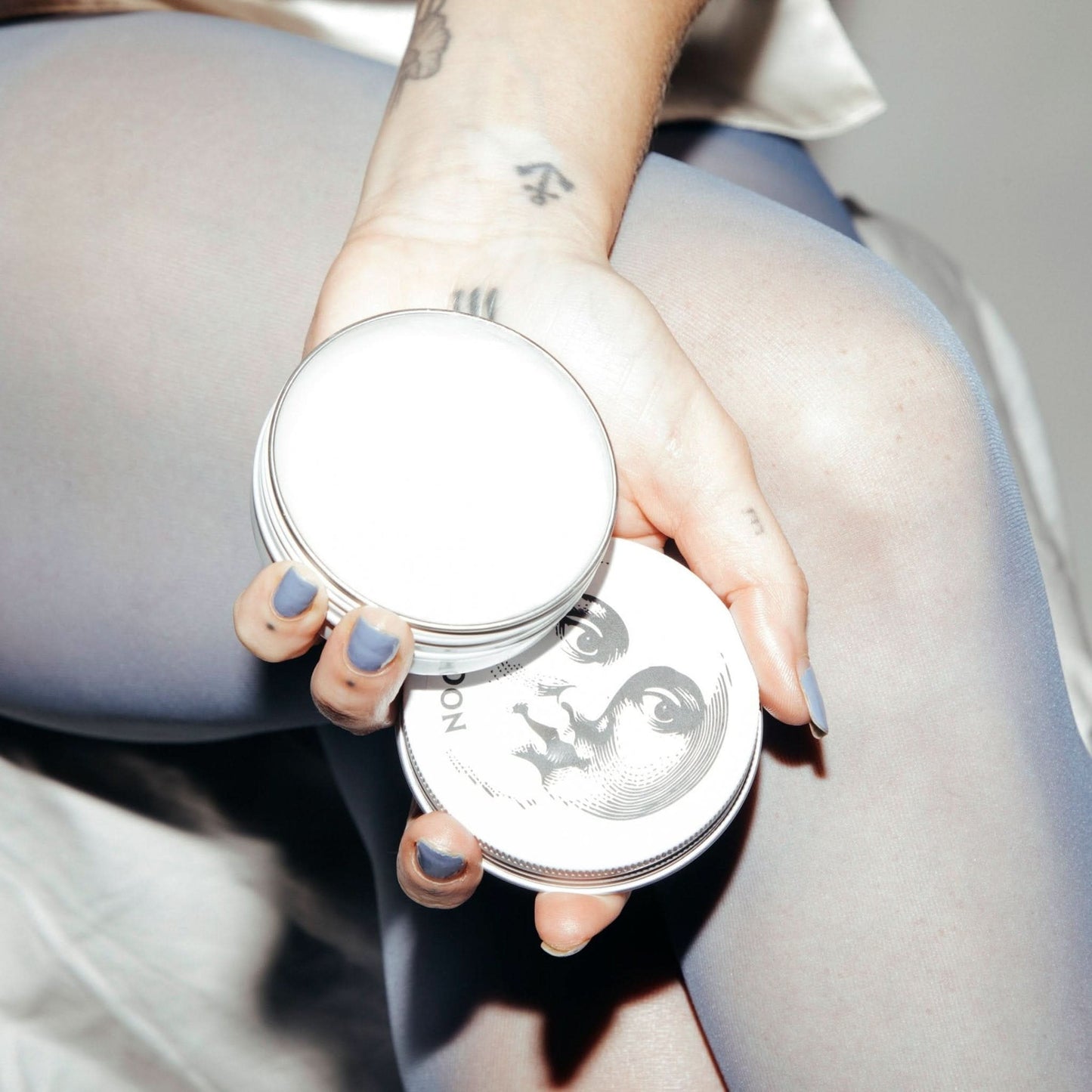
NOOKS Everywhere Balm is a 100% anhydrous lipid system. Zero water. No emulsifiers. No preservatives required because the water activity sits below the threshold microorganisms need to proliferate. The product is positioned by NOOKS as a daily-use barrier repair balm for face, body, and hands.
The formula was developed across three iterations and user-tested across sensitive and reactive skin profiles. It does not have the clinical observational study base that Cicaplast has. That’s relevant context for choice.
Its key actives:
- MCT Oil. Fast-absorbing carrier. Improves penetration of actives into the stratum corneum. Contributes to the 60 to 90 second absorption window.
- Shea Butter. Fatty acid complex. Supports barrier structure.
- Jojoba Oil. A liquid wax ester, structurally similar to human sebum. Integrates into the stratum corneum.
- Calendula-Infused Sunflower Oil. Linoleic acid-rich base with calendula macerate. Linoleic acid is a ceramide precursor.
- Beeswax, edible-grade. Structural integrity. Occlusive layer.
- Squalane, olive-derived. Skin-identical lipid naturally present in the stratum corneum. Integrates into the lipid matrix. Reduces TEWL.
- Marshmallow Root Oil Infusion. Mucilage-rich. Soothing.
- Plantain Leaf Oil Macerate. Wound healing, anti-inflammatory, mild antimicrobial.
- Vitamin E, low-scent. Antioxidant. Prevents oxidation of the formula’s unsaturated fatty acids.
- Monolaurin / Glyceryl Laurate. Food-grade antimicrobial. FDA GRAS status.
- Manuka Oil, food-grade. Antimicrobial and anti-inflammatory. Sub-irritant dose.
- Bakuchiol. Retinol alternative with peer-reviewed evidence showing comparable efficacy to retinol 0.5% over 12 weeks, without photosensitivity or pregnancy contraindications. Limited paediatric study data.
- Bisabolol. Inhibits NF-kB inflammatory signalling.
- Helichrysum CO2 Extract. Contains arzanol, a 5-LOX inhibitor and NF-kB suppressor. Anti-inflammatory and tissue regenerative properties documented in laboratory and small clinical studies.
Clinical strengths of NOOKS
- 100% concentration of actives at skin contact — no dilution in a water phase.
- No preservatives required. Eliminates a known source of contact dermatitis in barrier-compromised patients.
- No pH — no aqueous chemistry introduced to the skin’s acid mantle (see section 6).
- 60 to 90 second absorption — layers cleanly under makeup, allows frequent reapplication.
- Bakuchiol delivers a retinol-comparable mechanism without retinol’s irritation or photosensitivity profile.
- Lipid-replenishment mechanism integrates with the stratum corneum rather than sitting on top.
Considerations
- Cannot add hydration to dehydrated skin alone. Requires layering with a humectant when hydration is the primary need.
- No formal clinical trial program. Evidence is mechanistic and ingredient-level, drawing on peer-reviewed literature for individual actives rather than the finished formula.
- Bakuchiol has limited paediatric study data. Under 5, regular daily use should be discussed with a paediatrician.
- Not indicated for post-procedure healing in the same way Cicaplast is. Practitioners with patients in immediate post-laser or post-peel recovery have stronger evidence to reach for Cicaplast.
- Dhaliwal S, et al. Prospective, randomized, double-blind assessment of topical bakuchiol and retinol for facial photoageing. Br J Dermatol. 2019;180(2):289-296.
Chaudhuri RK, Bojanowski K. Bakuchiol: a retinol-like functional compound. Int J Cosmet Sci. 2014;36(3):221-230.
Appendino G, et al. Arzanol from Helichrysum italicum. J Nat Prod. 2007;70(4):608-612.
Li G, et al. alpha-Bisabolol alleviates atopic dermatitis via NF-kB inhibition. Molecules. 2022;27(13):3985.
Givol O, et al. A systematic review of Calendula officinalis for wound healing. Wound Repair Regen. 2019;27(5):548-561.
4. The honest comparison
Side by side, on the metrics that matter for daily wear and barrier-compromised skin. The two products differ on chemistry, mechanism, evidence base, and practical performance. Neither is universally superior.
|
CICAPLAST B5+ |
NOOKS EVERYWHERE BALM |
|
|
Base |
60 to 80% water |
0% water |
|
Format |
Oil-in-water emulsion |
100% anhydrous lipid system |
|
Primary mechanism |
Adds hydration via humectants; partial occlusion |
Reduces TEWL via lipid replenishment |
|
Active concentration at skin contact |
Diluted in water phase |
Undiluted in lipid phase |
|
pH |
Skin-physiological (~5.0–5.5) |
No pH (anhydrous, no water phase) |
|
Preservatives |
Required (phenoxyethanol, chlorhexidine, sodium benzoate) |
Not required (anhydrous, self-preserving) |
|
Absorbs |
Partial, film remains |
60 to 90 seconds, matte finish |
|
Clinical evidence base |
Substantial (multi-thousand-patient observational studies) |
Ingredient-level peer-reviewed; no finished-formula trial |
|
Paediatric indication |
From 3 months |
From 5 (bakuchiol caveat under 5) |
|
Post-procedure recovery |
Indicated |
Not indicated |
|
Oncology skincare |
Indicated |
Not indicated |
|
Retinol-mechanism active |
No |
Bakuchiol 0.5% |
|
Tissue regeneration |
Madecassoside |
Helichrysum CO2 / arzanol |
|
Anti-inflammatory |
Niacinamide, panthenol |
Bisabolol, calendula, plantain |
|
Antimicrobial |
Zinc, copper, manganese (surface) |
Monolaurin and manuka (lipid disruption) |
|
Pilling under makeup |
Possible |
Rare |
|
Reactivity in barrier-compromised skin |
Possible via water phase ingredients |
Reduced by anhydrous design |
What each does that the other doesn’t
Cicaplast does, NOOKS doesn’t: add water to dehydrated skin; carry a multi-thousand-patient clinical evidence base; hold formal post-procedure and oncology skincare indications; provide a paediatric indication from 3 months.
NOOKS does, Cicaplast doesn’t: deliver actives undiluted; operate without preservatives or pH; provide a bakuchiol retinol-mechanism active; absorb in 60 to 90 seconds for frequent reapplication.
These aren’t marketing differences. They’re structural differences in chemistry that produce different clinical fit for different skin states.
5. The niacinamide question
Niacinamide is a well-evidenced ingredient. Broadly tolerated. Real clinical benefit. But a meaningful subset of people, particularly those with sensitive or barrier-compromised skin, report flushing, stinging, and redness.
The mechanism: niacinamide itself doesn’t cause flushing. The reaction occurs when niacinamide is hydrolysed to nicotinic acid (niacin), a byproduct that triggers prostaglandin D2-mediated vasodilation. This conversion is accelerated by formulation instability, pH outside the 4 to 6 window, or high temperatures.
When this happens on skin where the protective lipid matrix is already depleted, the aqueous phase of the emulsion delivers the irritant directly to sensitised tissue with no buffer. The result is sting, flush, or redness, often mistaken for allergy.
This isn’t a Cicaplast-specific issue — it applies to any niacinamide-containing emulsion, and Cicaplast B5+ is broadly well-tolerated. But for patients who have specifically reacted to niacinamide products in the past, an anhydrous formula without niacinamide and without the water-phase delivery vector removes that potential trigger.
Wohlrab J, Kreft D. Niacinamide: mechanisms of action and topical use in dermatology. Skin Pharmacol Physiol. 2014;27(6):311-315.
6. The chemistry of going without water
Two things change when a barrier formula is anhydrous. The first is preservatives. The second is pH. Both are worth understanding because they explain how anhydrous and emulsion products differ at the skin contact level, even when ingredient lists look similar.
Why no preservatives are needed
Water-based formulations need preservatives. This is chemistry, not laziness. Microorganisms need water activity above 0.6 to proliferate. Anhydrous formulations sit well below this threshold and are self-preserving by definition.
The clinical relevance: preservatives are among the most common causes of cosmetic contact dermatitis. Methylisothiazolinone (MI) reached sensitisation rates of 13 to 15% in patch-test populations during its peak use. Formaldehyde-releasing preservatives (quaternium-15, DMDM hydantoin, imidazolidinyl urea) appear consistently in the top ten contact allergens. Even modern, well-tolerated preservatives like phenoxyethanol cause reactions in a small but real subset of patients with compromised barriers.
Cicaplast uses phenoxyethanol, chlorhexidine digluconate, and sodium benzoate. These are well-chosen, modern preservatives used because the water phase requires them. NOOKS doesn’t need them because there is no water for microbes to grow in. Neither approach is wrong. They produce different reactivity profiles in barrier-compromised patients.
Why pH doesn’t apply to anhydrous formulas
Cicaplast is formulated at skin-physiological pH, in the 5.0 to 5.5 range, matched to the skin’s acid mantle. This is the right choice for a water-based barrier cream.
NOOKS doesn’t have a pH. pH is a measurement of hydrogen ion concentration in an aqueous solution. No water, no pH. Anhydrous formulations don’t carry an acid or alkaline phase onto the skin because there is no phase to be acid or alkaline. The lipids integrate into the stratum corneum’s existing lipid matrix without introducing aqueous chemistry.
This is the same reason facial oils, anhydrous balms, and pure lipids like squalane don’t require pH adjustment. They aren’t playing in the pH game at all. Practically: the skin’s natural acid mantle remains undisturbed under an anhydrous balm because nothing aqueous has been introduced to disturb it.
Atwater AR, et al. Trends in methylisothiazolinone contact allergy in North America and Europe. JAMA Dermatol. 2023;159(3):267-274.
ISO 29621:2017. Cosmetics: guidelines for risk assessment of microbiologically low-risk products.
7. Who should use what
This isn’t which-product-is-better. It’s which product’s chemistry better fits the skin state in front of you. In several cases the answer is layering, not choosing.
|
SKIN STATE |
BETTER FIT |
WHY |
|
Acute post-procedure recovery (post-laser, post-peel, post-epilation) |
Cicaplast |
Holds formal post-procedure indications and multi-thousand-patient evidence base |
|
Genuinely dehydrated skin (water content low) |
Cicaplast or layered approach |
Anhydrous balms cannot add water; humectants required |
|
Lipid-deficient, dry, barrier-damaged skin (lipid composition low) |
NOOKS |
Lipid-replenishment mechanism integrates with stratum corneum |
|
Skin that has reacted to water-phase ingredients before |
NOOKS |
No water phase, no preservatives, no pH carrier |
|
Eczema flare, acute |
Either; both suitable for eczema-prone skin |
Cicaplast has emollient + soothing evidence; NOOKS suits ongoing daily use post-flare |
|
Use under makeup |
NOOKS |
60–90 second absorption; lower pilling risk |
|
Hands washed frequently throughout the day |
NOOKS |
Rapid absorption supports frequent reapplication without residue |
|
Daily moisturisation in non-acute skin |
Either |
Choice depends on whether skin needs hydration or lipid support; can be layered |
|
Skin during oncology treatment |
Cicaplast |
Specifically tested and indicated for this context |
|
Children under 5 |
Cicaplast |
Paediatric indication from 3 months; NOOKS contains bakuchiol with limited paediatric data |
|
Children 5 and over |
Either, with paediatrician consult for regular use |
Both formulations broadly gentle; choice is preference + skin state |
|
Looking to consolidate multiple products |
NOOKS |
Single-tin format can replace multiple barrier and emollient products in some routines |
On layering
Two patterns are clinically supported:
Pattern one, for genuine dehydration: apply a humectant-containing product (Cicaplast or similar) to damp skin first, then apply an occlusive (NOOKS or similar) over the top to seal the humectant layer in. This addresses both dehydration and TEWL simultaneously, and outperforms either product alone in cases of severe dehydration.
Pattern two, for overnight barrier repair: complete a standard routine then apply an anhydrous balm as the final step. The lipid layer reduces TEWL overnight while underlying actives continue to work. This is a common clinical recommendation for patients with persistent overnight dryness.
UPDATED 24th May 2026: how people are actually using NOOKS
Patterns we’ve seen emerge through community feedback since the original publication. These are use observations, not new clinical claims. The underlying mechanisms haven’t changed.
Consolidating a routine
A pattern: patients retire two to four products and replace them with one anhydrous balm. Lip balm, paw paw, Vaseline, an ambivalent face moisturiser. The clinical logic is sound: a single lipid-replenishment product can perform several occlusive and emollient functions provided the underlying skin state is suitable for that mechanism. The question worth asking is which products in the current routine are doing a job an anhydrous balm already covers.
Multiple coexisting skin states
Most adult skin presents with more than one state at once: dryness in one zone, sensitivity in another, congestion elsewhere. Products that target a single state can sometimes worsen the others. A barrier-repair-first product that doesn’t introduce aqueous chemistry, fragrance, or active stimulation tends to be well-tolerated across multiple coexisting states on the same face.
Under foundation
The 60 to 90 second absorption window allows foundation to be applied over the top without pilling. Practical use: apply, wait one to two minutes, apply foundation. Relevant for patients who experience pilling or slide with heavier emollients under makeup.
Overnight, as a final step
Use of an anhydrous balm as the last step in an evening routine is a common pattern. The lipid layer reduces TEWL overnight while underlying treatment products continue to act. This is supported by the layering pattern described above.
Long-term reactive skin
Patients with sustained barrier compromise — months to years of reactivity, often having tried multiple treatments without success — often tolerate anhydrous formulations better than emulsions. The mechanism is plausible: removing the water phase removes preservatives, pH carriers, and water-soluble actives that can trigger reactions in this population. This is observational, not a controlled outcome, but it is a consistently reported pattern.
Eczema-prone skin in households
Suitable for eczema-prone skin is a defensible claim for NOOKS, supported by the absence of common irritants (no fragrance, no essential oils above sub-irritant thresholds, no preservatives, no aqueous reactivity vectors). It does not treat eczema as a condition. For acute eczema management, dermatology guidance and prescribed treatments remain the standard of care.
Children’s skin
Gentle enough for occasional use on children’s dry patches, chapped lips, or rough skin from age 5 and up. Under 5, Cicaplast has the clearer paediatric evidence base and indication from 3 months. For NOOKS use on children under 5 — specifically the bakuchiol component, which has limited paediatric study data — we recommend a paediatrician consult before regular daily use.
Occupational hand dryness
Hospitality, healthcare, trades, parenting. Hands subjected to repeated washing and friction throughout the day. The absorption window of an anhydrous balm makes frequent reapplication practical without leaving residue on tools, equipment, or food. This is a use case where the speed-of-absorption spec genuinely matters clinically.
Patients moving from petroleum-based occlusives
Some patients have been using Vaseline or similar petroleum-based occlusives long-term and want a like-for-like alternative with active treatment chemistry. The substitution is straightforward: NOOKS performs the same occlusive function with added lipid-replenishment and treatment actives, without the petroleum. This is not a clinical superiority claim. It is a substitution patients commonly make.
The short version
Cicaplast B5+ is a well-formulated water-based barrier cream with strong clinical evidence, broad indications including paediatric and post-procedure use, and a long-established place in dermatology practice. It does what it sets out to do, and does it well.
NOOKS Everywhere Balm is an anhydrous lipid system with a different mechanism. No water phase. No preservatives. No pH. Active ingredients delivered undiluted. It is suited to lipid-deficient, reactive, or barrier-compromised skin where the water-phase chemistry of an emulsion is itself a complication.
Both repair barrier function. They use different chemistry to do it. Each is the better choice in different circumstances. In several common circumstances they layer.
If you want the full evidence base, including all 34 supporting citations and the complete formula breakdown, the white paper is available for download below.
Citations
All claims in this post are supported by peer-reviewed literature. Full list: