Barrier Care: What It Actually Means (And Why Everyone Suddenly Cared)
Share
The skincare industry discovered your skin has a protective layer. Around 2023. Dermatology knew in the 1960s.
The Trend That Should've Been Basic Knowledge
Barrier care exploded around 2023-2024. Moisturizer brands renamed their products "barrier repair." Influencers discovered ceramides exist. Reddit launched 47 megathreads about "compromised barriers."
The skincare industry treated this like a revolutionary concept.
Dermatology has been talking about it since the 1960s.
So what changed? Not the science. Just the marketing budget.
Brands spent a decade selling you acids, retinoids, and "active ingredients" that stripped your skin. Then sold you "barrier repair" to fix the damage they caused.
Convenient.
Let's cut through the wellness language and talk about what barrier care actually means.
What Your Skin Barrier Actually Is (The Unsexy Truth)
Your skin barrier — technically called the stratum corneum — is the outermost layer of your epidermis. It's approximately 10-20 cell layers thick. About as thick as a sheet of plastic wrap.
Structure:
Think bricks and mortar. The "bricks" are dead skin cells (corneocytes). The "mortar" is a lipid matrix made of:
- Ceramides (50% of the lipid content)
- Cholesterol (25%)
- Free fatty acids (25%)
These lipids are arranged in a specific crystalline structure. When intact, they create a semi-permeable barrier that:
- Prevents transepidermal water loss (TEWL)
- Blocks external irritants, allergens, and pathogens
- Maintains skin pH (~4.5-5.5, slightly acidic)
- Regulates immune response
When it's working: You don't notice it. Skin feels normal. Products absorb normally. You have better things to think about.
When it's damaged: Everything hurts. Water stings. Air irritates. Your face betrays you constantly.
Why Barrier Care Became Necessary (Spoiler: We Did This to Ourselves)
Fifty years ago, barrier damage was rare outside of occupational exposure (dishwashers, healthcare workers, construction).
Now it's epidemic.
What changed:
1. Active ingredient overload
The industry convinced you that improvement requires aggression. Daily acids. Nightly retinoids. Weekly peels. Vitamin C layered with everything.
Each active disrupts the barrier. Stacking them compounds damage faster than skin can repair.
2. The 10-step routine
More products = more preservatives, emulsifiers, fragrances, and penetration enhancers. Each one increases irritation potential.
Your skin doesn't need 10 steps. It needs 3 that actually work.
3. "Clean" doesn't mean gentle
Essential oils. "Natural" fragrances. Plant extracts. All marketed as "clean."
Many are more irritating than synthetic alternatives. Lavender oil is more allergenic than most parabens.
4. DIY skincare trending
Lemon juice. Baking soda. Apple cider vinegar. TikTok convinced people that kitchen ingredients = skincare.
Your skin's pH is 4.5-5.5. Lemon juice is 2.0. Baking soda is 9.0. Both destroy your barrier. Fast.
5. Hyper-cleansing
Double cleansing. Oil cleansing. Micellar water. Cleansing balms. Foam cleansers.
Most people are over-cleansing. Stripping natural oils twice daily, then wondering why skin is "dehydrated."
Result: An entire generation with compromised barriers, buying products to fix damage caused by... products.
How You Know Your Barrier Is Damaged
Early signs:
- Tightness after cleansing
- Products that used to work now sting
- Sudden sensitivity to weather, fabrics, water temperature
- Skin feels "thin" or fragile
- Makeup doesn't sit right anymore
Moderate damage:
- Redness that won't calm down
- Flaking that gets worse when you moisturize
- Breakouts in areas you've never broken out before
- Visible capillaries or persistent flush
- Burning sensation with most products
Severe damage:
- Water stings
- Everything stings
- Face feels like it's on fire
- Can't tolerate any products
- Skin looks angry and inflamed constantly
The irony: Most people respond to these symptoms by adding more products. Calming serums. Barrier repair creams. Soothing masks.
More products = more potential irritants = slower healing.
The actual solution: Stop. Everything. Let your skin rebuild without interference.
What Actually Supports Barrier Function (Not Marketing Claims)
Barrier care isn't a product category. It's an approach.
What your barrier needs to repair:
1. Lipid replacement Your barrier is 50% ceramides. Replenishing them supports natural structure.
Found in: Shea butter (contains natural ceramides), plant oils rich in linoleic acid
Not found in: Most "ceramide creams" (contain synthetic ceramides that don't integrate well)
2. Occlusive protection Creates a seal to prevent water loss while barrier rebuilds.
Effective occlusives: Beeswax (breathable), squalane, shea butter
Ineffective occlusives: Petroleum (suffocates), mineral oil (sits on surface without supporting repair)
3. Anti-inflammatory support Damaged barriers trigger inflammatory response. Calming inflammation speeds healing.
Effective: Calendula, bisabolol, marshmallow root, colloidal oatmeal
Ineffective: Essential oils (often more irritating than calming), synthetic fragrance
4. Fatty acid balance Omega-3 and omega-6 fatty acids support cell membrane integrity.
Found in: Jojoba oil, rosehip oil, sea buckthorn
Not found in: Most water-based moisturizers (can't deliver lipids effectively)
5. pH maintenance Healthy barrier function requires slightly acidic pH (4.5-5.5).
Supports pH: Lactic acid (in trace amounts), naturally acidic oils
Disrupts pH: High-pH cleansers, baking soda, most bar soaps
Why Most "Barrier Care" Products Fail
The industry saw a trend and flooded the market with "barrier repair" products. Most don't work.
Common problems:
1. Water-based formulas Most moisturizers are 60-80% water. Water requires preservatives. Preservatives require emulsifiers. Emulsifiers can disrupt the very barrier they claim to repair.
The fix: Anhydrous (water-free) formulations deliver concentrated lipids without needing chemical intervention.
2. Synthetic ceramides Lab-created ceramides don't integrate into skin's natural lipid structure as effectively as plant-derived ceramide precursors.
The fix: Use ingredients that provide ceramide building blocks (shea butter, plant sterols) that skin can incorporate naturally.
3. Fragrance (even "natural") Fragrance is the #1 cause of contact dermatitis. Even in "barrier repair" products.
The fix: Zero fragrance. Not "unscented" (which can still contain masking fragrances). Actually fragrance-free.
4. Too many ingredients 30-ingredient "barrier repair" creams increase irritation potential exponentially.
The fix: Fewer ingredients, higher quality, each with specific barrier-supporting function.
5. Surface-only approach Products that sit on top without penetrating don't support deep barrier repair.
The fix: Molecular structures similar to skin's natural lipids (MCT oil, squalane, jojoba) that absorb into dermis where repair occurs.
How NOOKS Approaches Barrier Care
We didn't jump on the trend. We built the product that makes the trend irrelevant.
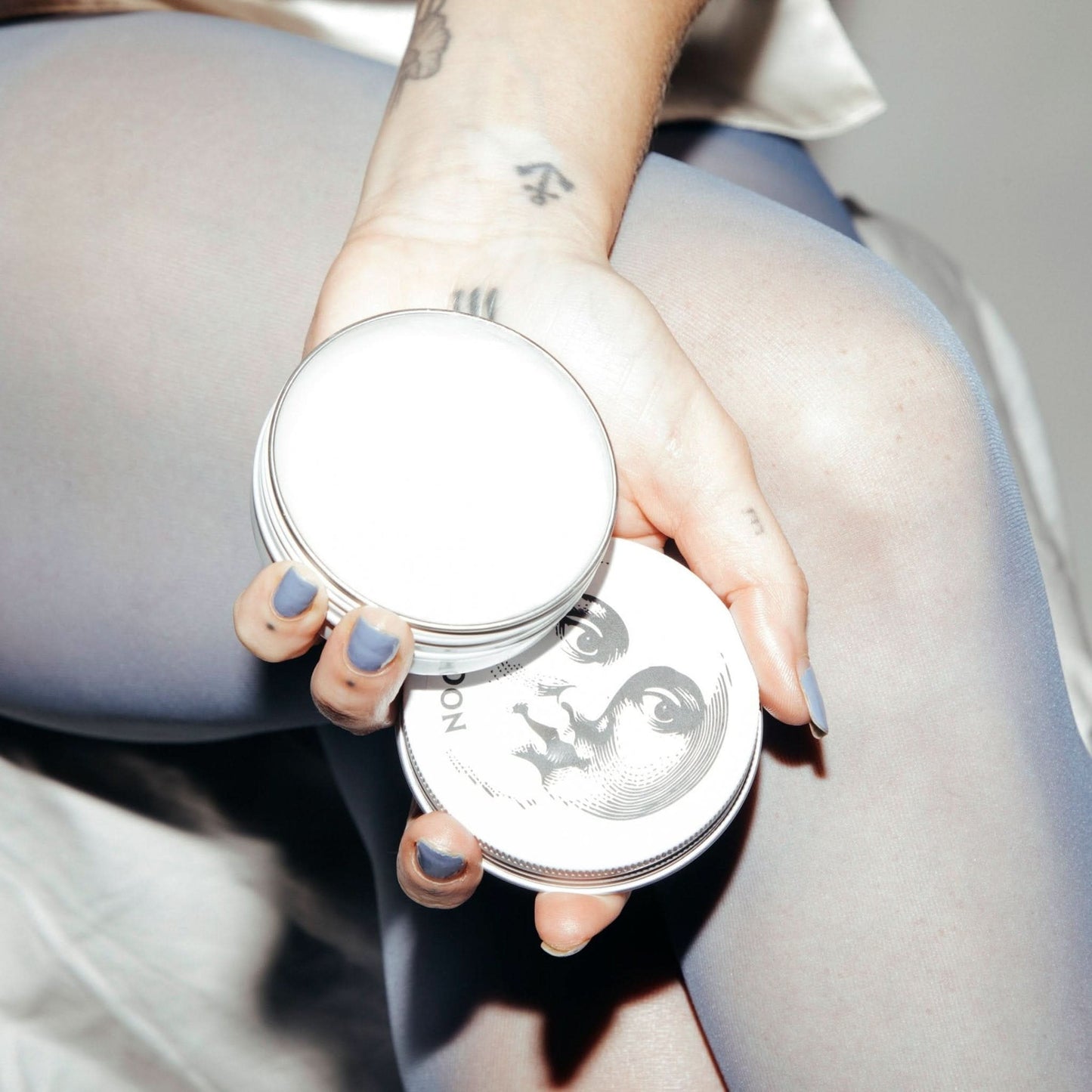
The Everywhere Balm — designed for barrier function first
Anhydrous formulation: No water = no bacteria = no preservatives = no emulsifiers = no unnecessary irritants.
Just 15 ingredients that support barrier structure directly.
Lipid-rich base:
- Shea butter: Natural ceramides, cholesterol, fatty acids
- Beeswax: Breathable occlusive seal
- Jojoba: Mimics skin's natural sebum
Deep penetration:
- MCT oil: Molecular structure similar to skin lipids
- Squalane: Penetrates to dermis, supports cell membrane integrity
Anti-inflammatory actives:
- Calendula: Reduces redness on contact
- Bisabolol: Calms reactive inflammation
- Marshmallow root: Soothes compromised tissue
pH-appropriate: Naturally slightly acidic. Supports skin's optimal pH without synthetic adjusters.
What it doesn't contain:
- Petroleum (suffocates without supporting repair)
- Fragrance (natural or synthetic)
- Essential oils (irritation risk)
- Water (requires preservatives)
- Emulsifiers (can disrupt barrier)
Result: Concentrated barrier support without ingredients that work against healing.
How to Actually Practice Barrier Care
Barrier care isn't about adding products. It's about removing damage.
Daily maintenance:
Morning:
- Splash with lukewarm water (or skip if skin feels good)
- Apply NOOKS to damp skin
- Apply mineral sunscreen
Evening:
- Cleanse gently (only if needed — over-cleansing damages barriers)
- Apply NOOKS to damp skin
- Extra layer on areas prone to dryness
What to avoid:
Stop:
- Hot water (strips natural oils)
- Over-cleansing (once daily maximum, skip mornings if skin isn't dirty)
- Harsh actives daily (retinol/acids 2-3x weekly maximum)
- Layering actives (never combine acids + retinol same night)
- Fragrance (in anything that touches your face)
Start:
- Lukewarm water only
- Gentle cleansers with pH 4.5-5.5
- Minimal product routine (3-4 products maximum)
- Spacing actives (one active per night, with "off" nights between)
- Listening to your skin (if it stings, stop)
Lifestyle factors:
Support barrier function:
- 7-9 hours sleep (skin repairs overnight)
- Omega-3 supplementation (supports lipid synthesis)
- Adequate water intake (internal hydration matters)
- Stress management (cortisol degrades collagen and lipids)
Damage barrier function:
- Chronic sleep deprivation (slows repair)
- High sugar diet (inflammatory, accelerates aging)
- Excessive alcohol (dehydrates, inflames)
- Smoking (restricts blood flow, depletes vitamin C)
Barrier care is 70% what you don't do. 30% what you do.
The Uncomfortable Truth About Barrier Care
The skincare industry created the barrier care trend to sell you solutions to problems they caused.
They sold you acids that stripped your barrier. Now they're selling you "barrier repair."
They convinced you that 10 steps = better skin. Now they're selling you "minimalist barrier care."
They marketed fragrance as luxury. Now they're selling you "fragrance-free for sensitive skin."
The pattern: Create damage. Profit from repair. Repeat.
Actual barrier care means:
- Fewer products, not more
- Gentler approach, not aggressive actives
- Supporting natural function, not disrupting then repairing
Your skin already knows how to maintain its barrier. It just needs you to stop sabotaging it.
Barrier Care Isn't a Trend. It's Maintenance.
Healthy skin has a functioning barrier. That's not revolutionary. That's baseline.
The fact that "barrier care" trended tells you how thoroughly the industry broke everyone's skin first.
NOOKS doesn't do trends. We formulated for compromised skin because the industry created an epidemic of it.
Petroleum-free. Water-free. Fragrance-free. Designed for barrier function from the molecular level up.
Not because it's trendy. Because it works.
Your barrier doesn't need marketing language. It needs lipids, anti-inflammatories, and to be left alone to do its job.
Competence over chaos. Function over fragrance.
Shop NOOKS Everywhere Balm — Barrier support for skin that's been through enough.