
A NOOKS GUIDE · 6 MIN READ · NO JARGON
Your skin used to handle this.
Tight after washing. Stings when you apply something that never used to sting. Dry patches that come back the moment you stop using the cream. Redness that won't fully calm. If any of this sounds familiar, it's not just dry skin. It's a barrier problem. And nobody has explained it to you because the people selling skincare benefit from you not knowing.
Or scroll down. We'll explain what's actually going on with your skin in the next 6 minutes.

WAIT, WHAT IS IT?
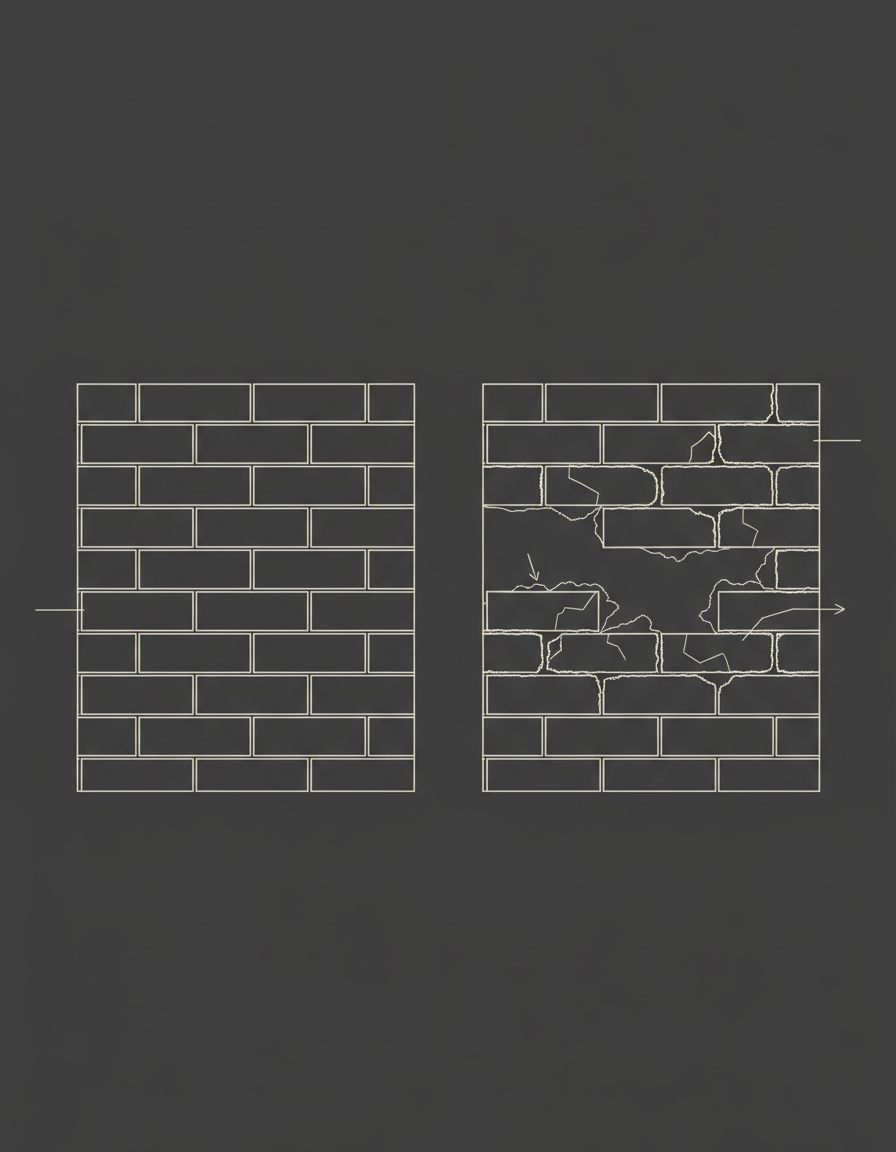
Your skin's outermost layer is a brick wall.
The outermost layer of your skin is called the stratum corneum. It's about as thick as a sheet of paper. Its job is to hold water in and keep irritants out — and it's built like a brick wall. The bricks are dead skin cells. The mortar between them is made of lipids — fats your skin produces naturally.
When the mortar is intact, your skin handles things it should be able to handle. Wind, hot water, soap, the morning rush, slightly aggressive products. Water stays inside, irritants stay outside, your skin works.
When the mortar starts breaking down — through over-cleansing, harsh exfoliation, hot showers, climate change, age, hormonal shifts, or just life — gaps appear in the wall. Water leaves your skin too easily (this is called transepidermal water loss). Irritants get in too easily. Your skin starts reacting to things that didn't used to bother it.
That's a damaged barrier. And it's responsible for most of the skin frustration you've been blaming on yourself.
SELF-DIAGNOSTIC
How many of these sound familiar?
Tightness after washing your face.
That feeling like your skin is too small for your face. Should not be normal.
Products that didn't used to sting now sting.
A new product, or a familiar one suddenly burns. Your barrier let the actives reach nerve endings they shouldn't be reaching.
Dry patches that come back the moment you stop using cream.
You're managing symptoms, not fixing the cause.
Redness that won't fully calm down.
Even when there's no obvious irritant. Background inflammation.
Skin feels hot or flushed for no reason.
Increased sensitivity to temperature change. Sign of barrier dysfunction.
You can't tolerate exfoliants you used to use weekly.
AHAs, BHAs, retinols feeling 'too much' is a barrier signal, not a strength signal.
Your skin used to bounce back from a bad night. Now it doesn't.
Slower recovery from sleep deprivation, alcohol, stress, illness.
Mysterious breakouts in places you don't usually break out.
Compromised barrier lets bacteria establish where they normally couldn't.
If you ticked three or more, you're in barrier-repair territory. Welcome — almost everyone is, eventually. Here's what to do about it.
THE 7 REASONS
Why this matters more than you think.
The skincare industry has spent decades selling you symptom-management. Cream for the dryness, serum for the redness, balm for the flakiness, oil for the tightness. Most of those products work — for a few hours. Then the symptom comes back, you reach for more, and the cycle pays for someone's third house.
Repairing the barrier is the inverse approach. You stop chasing the symptoms and rebuild what's causing them. Here are seven reasons it's worth doing.
01
REASON 01 OF 7
Your makeup will sit better.
WHAT YOU'RE FEELING
Foundation pills. Concealer separates. Powder cakes in the dry patches. Setting spray makes things worse. You blame the makeup. Sometimes it's the makeup. Usually it's the canvas.
WHAT'S ACTUALLY HAPPENING
Damaged barriers create uneven texture — patches of dryness alternating with patches that overcompensate by producing more oil. Makeup can't sit smoothly on inconsistent texture. Repair the barrier and the canvas evens out, often within 2-3 weeks. The same foundation you've been blaming starts to behave.

02
REASON 02 OF 7
Your skin will tolerate the actives you've been afraid to use.
WHAT YOU'RE FEELING
You bought the retinol. You used it three times. It burned, peeled, made you look like you'd been sandblasted. You returned it. You blamed yourself. You quietly assumed your skin couldn't handle 'real' skincare.
WHAT'S ACTUALLY HAPPENING
Active ingredients (retinol, vitamin C, AHAs, BHAs) need a healthy barrier to work. When the barrier is compromised, these actives reach nerve endings and inflammatory pathways they shouldn't be reaching — that's the burn. Repair the barrier first, and the actives that previously felt 'too much' work the way they were designed to. Most skin doesn't have an active-tolerance problem. It has a barrier problem.
03
REASON 03 OF 7
You'll stop reaching for moisturiser six times a day.
WHAT YOU'RE FEELING
You moisturise in the morning. Within an hour, your skin feels tight again. You moisturise at lunch. Tight again by afternoon. The cycle continues until bedtime, by which point you've used half a tube and your skin still feels like it's looking for water.
WHAT'S ACTUALLY HAPPENING
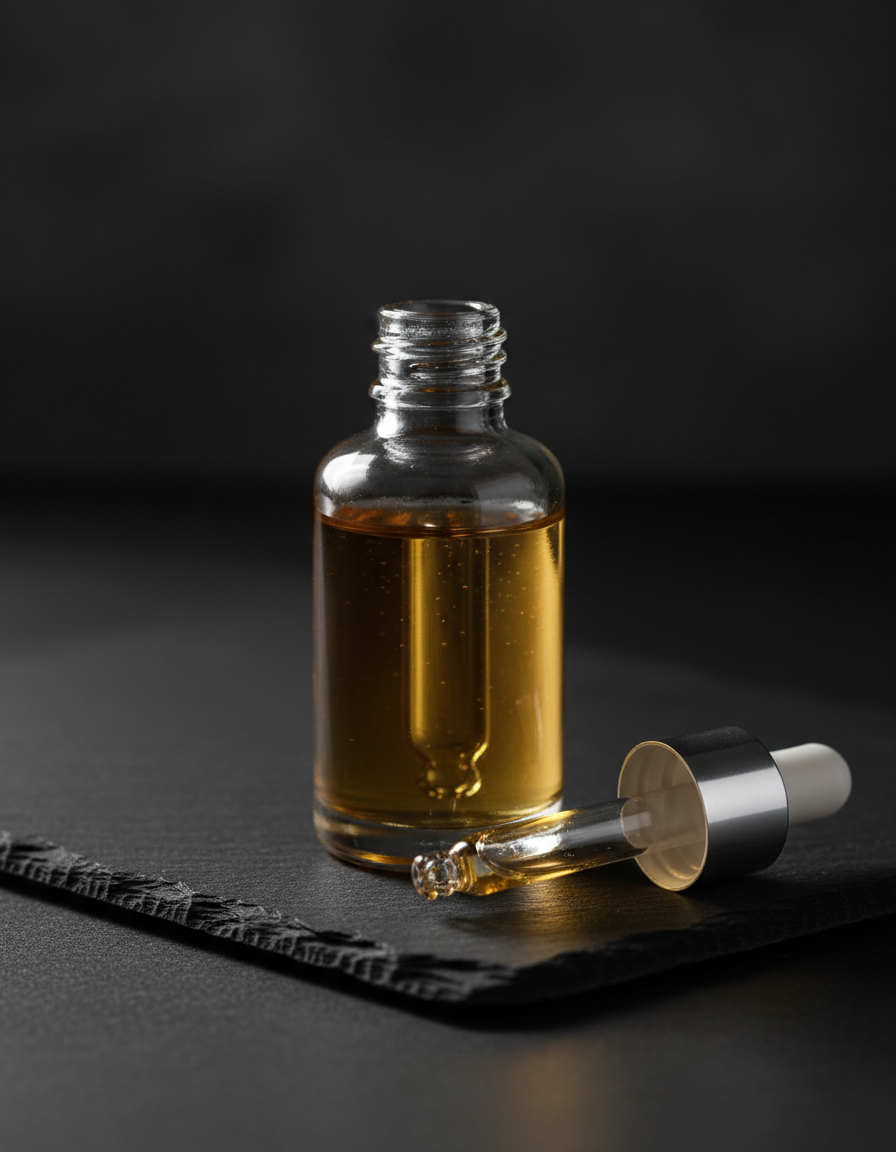
Most water-based moisturisers contain humectants that pull water from your dermis to your surface. The water evaporates within 20-40 minutes, leaving the surface drier than it was — and the dermis depleted. You reach for more. The cycle keeps you buying. An anhydrous formula (no water) works differently — it supports the lipid mortar in the wall, which holds your own water in for hours. You stop chasing moisture because you're not losing it.

04
REASON 04 OF 7
Your skin will calm down. Visibly.
WHAT YOU'RE FEELING
The redness around your nose. The flushing on your cheeks when you go from cold to warm air. The patches that appear from nowhere and stay for weeks. The slight inflammation that never fully resolves. You've been managing it with green-tinted concealer for years.
WHAT'S ACTUALLY HAPPENING
Background inflammation — the kind that doesn't have an obvious trigger — is one of the clearest signs of barrier dysfunction. When the barrier lets irritants through too easily, the immune system responds, and the response becomes chronic. Repair the barrier, the immune system has less to respond to, the redness recedes. This is the change customers describe most often. Visible, within 2-4 weeks.
05
REASON 05 OF 7
You'll spend less money on skincare.
WHAT YOU'RE FEELING
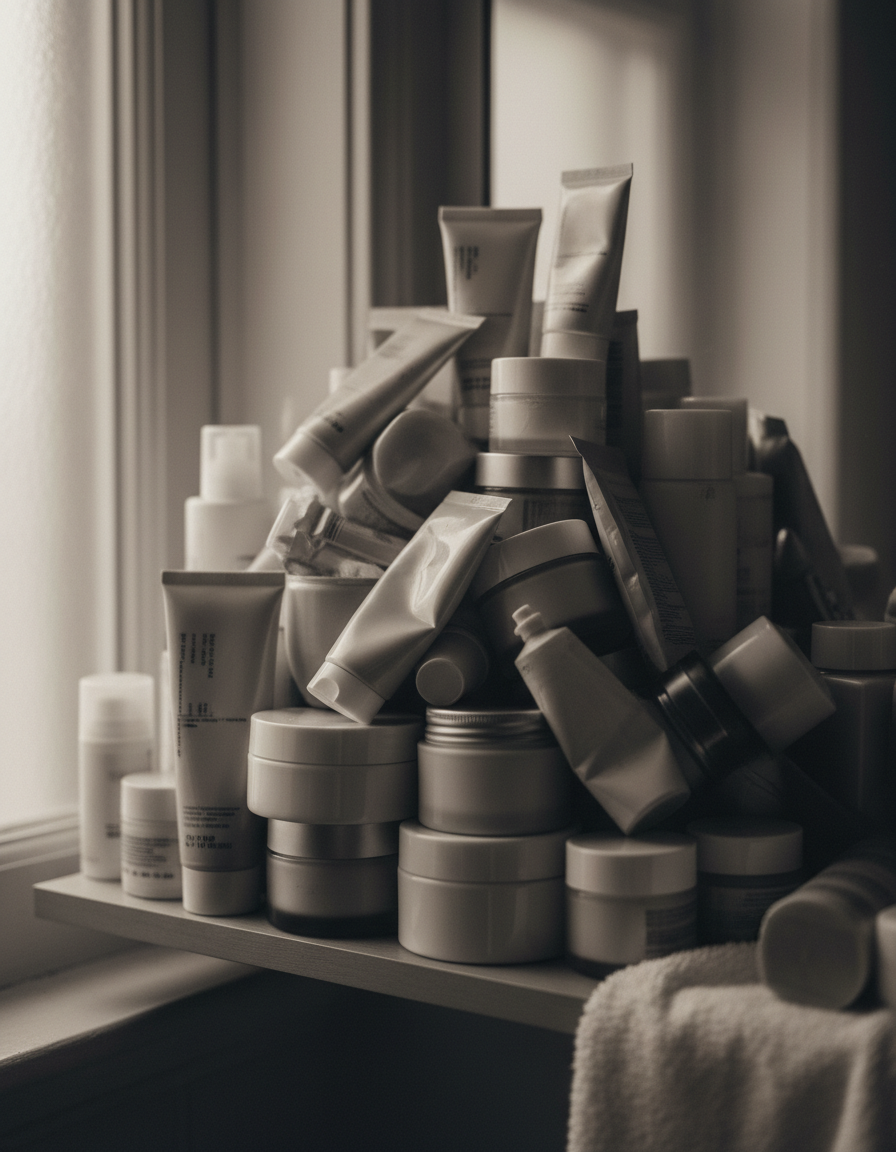
Your bathroom drawer. The half-used products. The serum you bought because someone on TikTok recommended it. The toner you stopped using after three days. The moisturiser that promised to be 'the only one you'll ever need' until it joined the others.
WHAT'S ACTUALLY HAPPENING
Symptom-management skincare requires ongoing purchase. Each product treats one consequence of the underlying barrier problem, none of them treat the cause, and so the symptoms keep returning. Repairing the barrier reduces the number of products you need — most people who repair their barrier consolidate from 6-8 products down to 2-3. The savings are significant. The drawer becomes legible.
06
REASON 04 OF 7
xxx
WHAT YOU'RE FEELING
The redness around your nose. The flushing on your cheeks when you go from cold to warm air. The patches that appear from nowhere and stay for weeks. The slight inflammation that never fully resolves. You've been managing it with green-tinted concealer for years.
WHAT'S ACTUALLY HAPPENING
Background inflammation — the kind that doesn't have an obvious trigger — is one of the clearest signs of barrier dysfunction. When the barrier lets irritants through too easily, the immune system responds, and the response becomes chronic. Repair the barrier, the immune system has less to respond to, the redness recedes. This is the change customers describe most often. Visible, within 2-4 weeks.
07
REASON 05 OF 7
xxx
WHAT YOU'RE FEELING
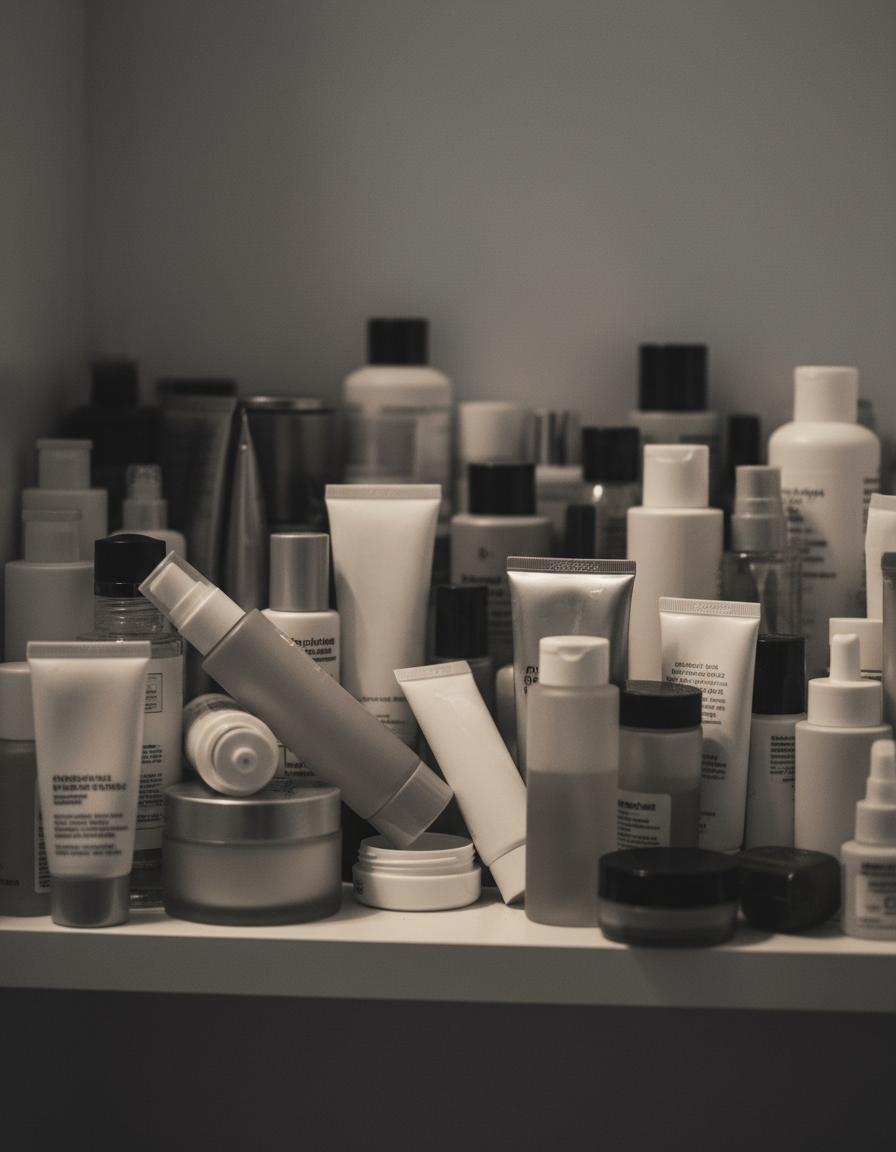
Your bathroom drawer. The half-used products. The serum you bought because someone on TikTok recommended it. The toner you stopped using after three days. The moisturiser that promised to be 'the only one you'll ever need' until it joined the others.
WHAT'S ACTUALLY HAPPENING
Symptom-management skincare requires ongoing purchase. Each product treats one consequence of the underlying barrier problem, none of them treat the cause, and so the symptoms keep returning. Repairing the barrier reduces the number of products you need — most people who repair their barrier consolidate from 6-8 products down to 2-3. The savings are significant. The drawer becomes legible.